Skip to content


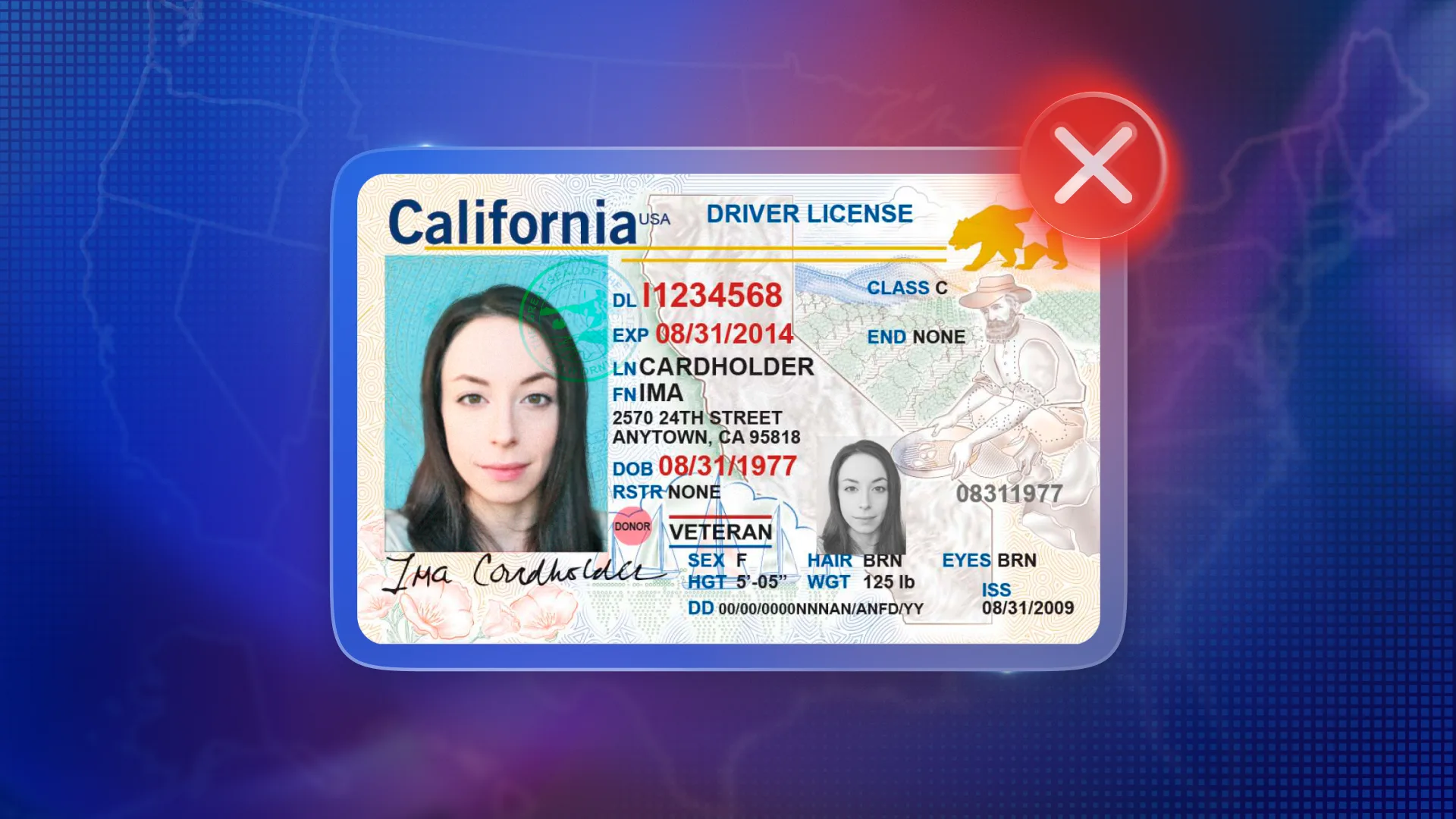

On Wednesday, October 1, the California DMV began issuing drivers licenses with a new format, including upgrades to several key security features.
The new California drivers license eliminates many of the design elements which were present on older versions of the document, including the state outline, gold miner, and agricultural fields and mountains, as well as the state flower (the California poppy) in the corner of the ID.
Comparing old California drivers license to 2025 California ID template update
Here’s how the two documents compare visually.
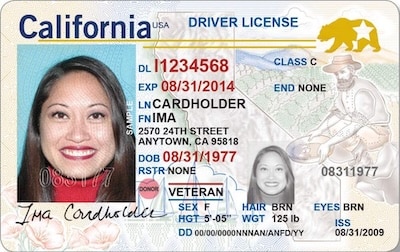
Older California drivers license format (issuance began in 2010)
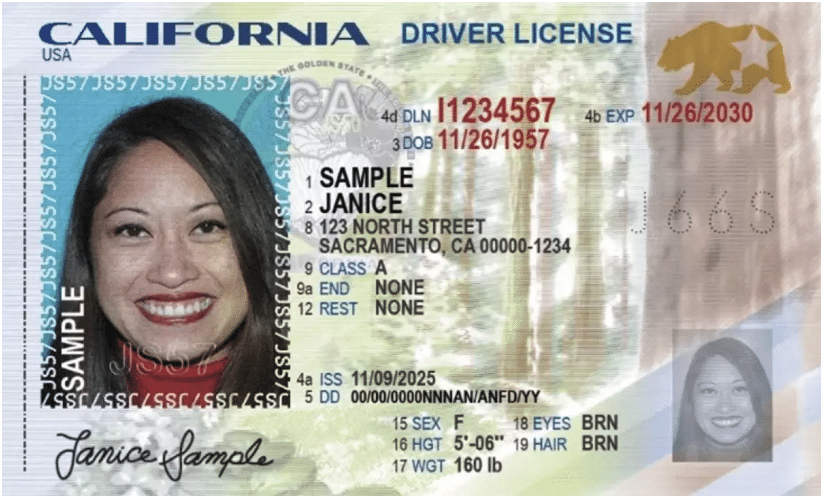
New California drivers license format (issuance began 10/1/2025) (Illustrative purposes only)
The new ID instead features imagery of a redwood forest and a small state seal which partially intersects with the ID photo.
The font for the state has changed significantly, and the headings for many of the fields have been removed, instead replaced with numbers. Date of birth has been moved from below the cardholder address to just below the drivers license number. And the secondary photo placement has been moved closer to the corner of the document.
The magstripe, which was present on the back of the previous ID template, has been removed. California was one of the last states to continue printing a magstripe on their drivers licenses and ID cards. The back of the ID retains the 1d barcode along the top edge of the document.
New security features on the California drivers license
A full list of security features will not be provided, however additional obvious enhancements include:
- Integration of enhanced infrared markings
- Digital security signature (embedded in barcode)
- Added microprints and additional security numbers embedded within the ID photo
- Changes to microprints within the design template on both the front and back of the document
Challenges reading the new California drivers license
California is one of the first states to utilize the latest version of AAMVA’s guidance on barcode structure (including the additional security features). For this reason, some ID scanner apps and ID authentication tools may have trouble properly validating California IDs unless they have been updated to work with the new AAMVA standard.
Additionally, the new template has significant overlap between the colorful design, holographic security features, and text present on the front of the ID. If an ID scanning software solution relies on optical character recognition (OCR), they may be challenges in accurate parsing of the text on the front of the ID.
Additionally, the ID’s barcode contains a secret security signature, which is intended to keep fraudsters from easily spoofing the document. If your ID scanning software is not able to detect IDs which lack this barcode signature, you may have challenges reading new California IDs.