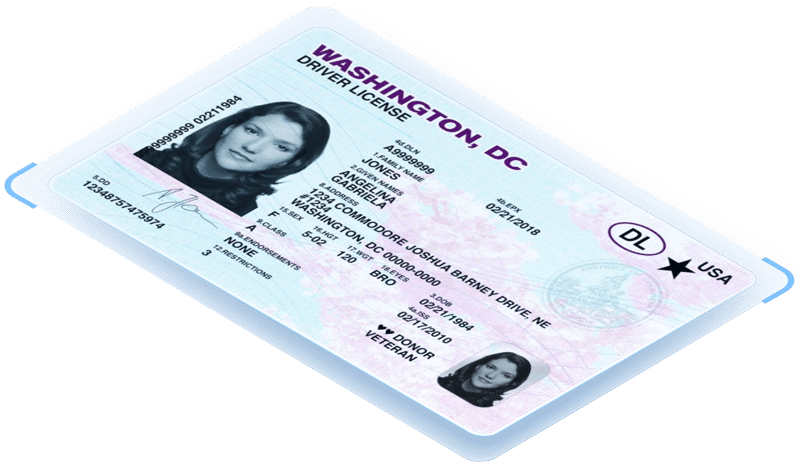

Age verification online is rapidly shifting from a best practice to a regulatory requirement. In 2026 and beyond, governments across the United States, United Kingdom, and European Union are moving toward enforceable age verification standards. At the same time, major digital platforms are testing and deploying stronger age verification tools in response to legal pressure, public scrutiny, and child safety concerns.
For businesses operating online, particularly those offering social interaction, user-generated content, gaming, or age-restricted materials, understanding the age verification roadmap is critical. Below, we examine which platforms are implementing age checks, the regulatory trends shaping enforcement, and how IDScan.net enables compliant, remote age verification.
Why age verification is becoming mandatory
For years, most websites relied on simple self-declaration, users typing in a birthdate and clicking “I am over 18.” Regulators increasingly view this approach as insufficient, given the ability to easily falsify this section.
In the United Kingdom, enforcement under the Online Safety Act has already begun. In early 2026, the UK Information Commissioner’s Office fined Reddit £14.5 million for failing to adequately protect children’s data and relying heavily on self-declaration. At the same time, Ofcom has fined adult websites for not implementing “highly effective” age assurance mechanisms. The message from UK regulators is clear: passive age gates are no longer acceptable.
In the European Union, age assurance is being integrated into broader Digital Services Act obligations and the EU Digital Identity Wallet initiative, with interoperable age verification standards expected to mature by the end of 2026.
In the United States, state-level legislation continues to expand. Many states now require age verification for adult content sites, and others are considering broader social media age restrictions and parental consent mandates. This fragmented but accelerating legal environment means platforms must prepare for multi-jurisdictional compliance.
Major platforms with age verification on the roadmap
Several high-profile platforms have already implemented or announced age verification measures that signal where the industry is heading.
Discord: Global age verification rollout
Discord has announced plans to expand age verification globally, with rollout targeted for the second half of 2026. The company initially proposed broader implementation but revised its approach following privacy concerns and regulatory feedback.
Discord’s evolving strategy includes multiple verification pathways for end users, such as payment method verification and potential biometric or device-based signals. The rollout is being driven in part by regulatory requirements in the UK, Australia, and other markets that now require stronger age assurance for access to certain online features.
Roblox: Mandatory age verification for chat
Roblox has already implemented mandatory age verification in certain contexts, particularly for access to more mature chat features. The company uses a combination of facial age estimation and optional ID verification by uploading a government ID to segment users by age group and limit inappropriate interactions.
Reddit: UK age verification requirements
Reddit recently implemented age verification measures for UK users accessing mature content in response to the Online Safety Act. Users may be required to verify age via selfie or government-issued ID.
YouTube: AI age estimation
YouTube has begun deploying AI-driven age estimation tools in the United States. The platform analyzes behavioral signals to determine whether a user is likely under 18 and applies additional protections accordingly. Users who are incorrectly flagged may verify their age through ID verification, credit card verification, or other methods.
Other social media platforms under regulatory pressure
Major platforms, including Instagram, Facebook, TikTok, Snapchat, X, and Twitch, operate in jurisdictions that now require enhanced age safeguards. While not all have explicitly announced full ID verification rollouts, regulatory scrutiny suggests stronger age verification mechanisms are likely on the roadmap as compliance obligations increase.
The rise of operating system–level age verification
One of the most significant developments for 2026 is the proposal to shift age verification responsibility from individual websites to operating systems.
Colorado lawmakers are considering legislation that would require age verification at the operating system level. Under this framework, a device would verify a user’s age once and then provide an age signal to respective apps and websites. This is an effort to reduce repetitive verification across services while standardizing age assurance at the device level.
If enacted, Colorado SB26-052 and other such laws could fundamentally reshape how platforms implement compliance, pushing age verification deeper into the digital infrastructure stack.
Global regulatory trends driving age verification
As previously mentioned, several international regulatory movements are shaping the roadmap:
United Kingdom: Online Safety Act Enforcement
The UK’s Online Safety Act requires “highly effective” age assurance for platforms accessible to children. Enforcement for non-compliance has already resulted in substantial fines. Platforms serving UK users must now demonstrate proactive, robust safeguards, not just outdated disclaimers.
European Union: Digital Identity Wallet and DSA
The EU is working toward interoperable digital identity tools that can provide verified age signals while preserving user privacy. By late 2026, age verification tied to digital identity frameworks may become more standardized across member states.
France: Universal age verification requirements
France has moved toward requiring age verification for social media accounts and porn websites, including for existing users, after passing the French SREN law in 2024. Implementation timelines indicate enforcement could begin as early as late 2026.
United States: Expanding state laws
While there is no unified federal age verification mandate, state-level requirements for adult content, social media platforms, and dating apps continue to expand. Utah was one of the first states to issue strict age verification requirements for almost all apps and social media sites on the market at the app store level. This patchwork approach with varying levels of strictness and requirements increases compliance complexity for national platforms and creates demand for scalable verification solutions.
How IDScan.net enables compliant remote age verification
As laws evolve, businesses need reliable, privacy-conscious solutions that can adapt across jurisdictions. IDScan.net provides remote age verification capabilities designed to meet emerging regulatory standards from both a practical and compliance standpoint.
DIVE is an Adaptive AI global digital ID verification platform. The process, which takes 10-20 seconds, prompts users to use their phone camera to take photos of the front and back of their ID and then complete a selfie face match. The ID is verified to ensure it is not fraudulent and has not been tampered with, and the face match process is equipped with liveness detection and anti spoofing to ensure the user matches the ID.
Additionally, for US-based customers with stricter age verification regulations, businesses have the option to add on third party checks to databases like the DMV or Social Security Administration to confirm issuance of the ID.
DIVE Highlights
- Easily configurable age minimums based on jurisdictional requirements
- Seamless integration into websites, apps, workflows, etc via API
- Customizable PII settings to adhere to multi-jurisdictional privacy laws
Preparing for 2026 and beyond
The trajectory is clear: age verification is becoming a core compliance requirement for social platforms, gaming environments, and age-restricted websites. Regulators across the globe are demanding effective, demonstrable safeguards. Platforms are experimenting with layered verification approaches and non-compliance enforcement actions are increasing.
Organizations that wait for formal enforcement risk fines, reputational damage, and operational disruption. Those that proactively implement robust age verification systems will be better positioned to scale, build trust, and adapt to new laws.
Age assurance is no longer just about restricting access; it is about proving compliance.
For businesses preparing for 2026 and beyond, implementing a secure, remote, and adaptable age verification framework is not optional. It is foundational.