Skip to content


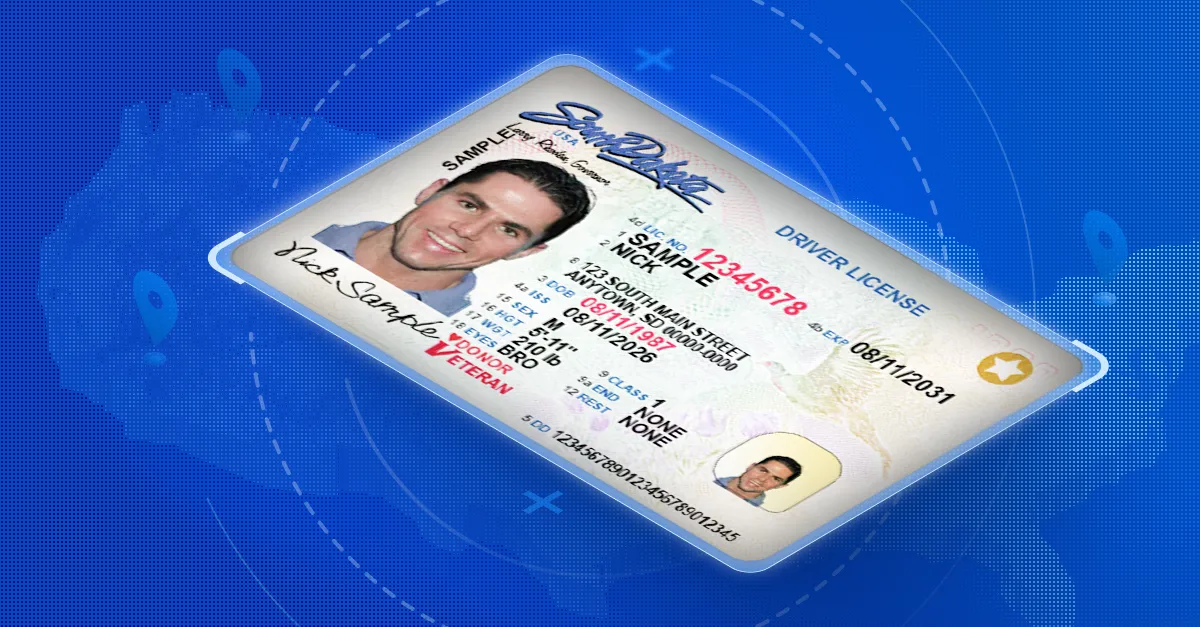

South Dakota has introduced a new driver’s license and identification card design as of September 2026. Driver License Exam Stations across the state began transitioning to the new format throughout the month, with individual locations moving to the updated system on different dates.
The new South Dakota IDs feature updated security technology, new printing methods, embedded design elements and a modernized layout. The changes are intended to make legitimate credentials more difficult to counterfeit while improving readability for businesses, law enforcement and cardholders.
When did South Dakota begin issuing the new ID?
South Dakota began rolling out its redesigned driver’s licenses and identification cards in September 2026.
Unlike a statewide change that takes effect at every issuing location on the same day, South Dakota is transitioning Driver License Exam Stations individually. This means the exact date on which the new format becomes available can vary by location.
Once an issuing location transitions to the new system, residents receiving a new ID or renewing an existing driver’s license will receive the updated format.
The rollout does not invalidate existing South Dakota IDs. Current driver’s licenses and IDs remain valid until their normal expiration dates. Cardholders do not need to replace an otherwise valid credential simply because a new format has been introduced.
For businesses, this means both the previous South Dakota ID format and the September 2026 format will remain in circulation simultaneously for several years.
What changed on the new South Dakota ID?
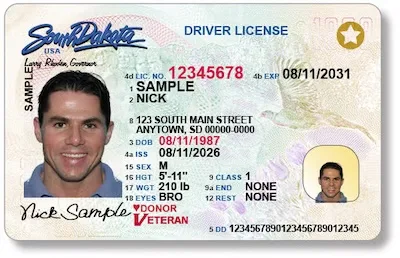
South Dakota’s 2026 driver’s license and identification card redesign introduces both a modernized appearance and new security technology. While the state has not publicly identified every individual security feature incorporated into the credential, the South Dakota Driver Licensing Program has confirmed several significant changes.
Visual and design changes include:
- A modernized overall card layout designed to improve readability and usability.
- Updated design elements that highlight the beauty and character of South Dakota.
- A refreshed presentation intended to make important credential information easier for cardholders, businesses and law enforcement to identify.
- New embedded design elements that are incorporated into the overall appearance of the credential rather than relying solely on printed information.
- An updated credential generation that is visually distinguishable from previous South Dakota driver’s licenses and identification cards.
Security changes include:
- Advanced security technology designed to help combat identity theft and document fraud.
- Updated printing methods that make the credential more difficult to accurately reproduce.
- Embedded security and design elements intended to increase resistance to counterfeiting.
- A new credential-production system capable of supporting the state’s updated security technology.
- Security improvements designed to keep South Dakota credentials current as ID-production and counterfeiting technologies continue to evolve.
What the new South Dakota ID means for businesses
Whenever a state introduces a new ID format, businesses that regularly verify identity should ensure their ID verification processes can accommodate both the new and previous versions.
This is particularly important for organizations using IDs for age verification, visitor management, customer onboarding, ID fraud prevention, or other identity-dependent workflows.
Employees relying solely on visual inspection may initially be unfamiliar with the new credential. A legitimate September 2026 South Dakota ID could look substantially different from the credential employees have been trained to recognize.
The opposite problem can occur as well. Because previous South Dakota credentials remain valid, employees should not reject an older card simply because it does not resemble the latest design.
Organizations should train employees to recognize that multiple legitimate generations of South Dakota IDs will remain in circulation during the transition.
Can the new South Dakota ID be scanned?
Modern South Dakota driver’s licenses and IDs contain machine-readable information that can be used by compatible ID scanning systems to extract credential data.
However, ID parsing and ID authentication are not the same thing.
Basic barcode scanning reads the information stored within the credential’s barcode. This can help automate age calculations, capture customer information and reduce manual data entry.
Authentication takes ID verification further by evaluating whether the document itself conforms to the expected characteristics of a legitimate South Dakota credential.
This distinction becomes especially important after a state changes its ID format. ID verification technology, like VeriScan Identity Platform, must recognize the correct credential generation rather than comparing a newly issued document against an outdated template.
How IDScan.net handles new ID formats
IDScan.net maintains support for identity documents from across the United States and around the world. As jurisdictions introduce new driver’s licenses and identification cards, document templates and verification capabilities must evolve alongside them.
IDScan.net’s identity verification technology can read and process government-issued identity documents while performing checks appropriate to the verification workflow.
For organizations using document authentication, verification can extend beyond simply determining whether a barcode scans. Authentication-capable workflows can evaluate the physical document and compare it against the expected characteristics of legitimate credentials.
This is especially useful during transition periods like South Dakota’s 2026 rollout, when businesses may encounter both new and previous credential formats.
Final thoughts
South Dakota’s September 2026 driver’s license and identification card redesign represents the state’s latest effort to modernize its identity credentials and make physical IDs more difficult to counterfeit.
The transition will happen gradually as residents renew or replace their credentials, meaning businesses should expect both old and new South Dakota IDs to remain in circulation.
For organizations that regularly verify identity, staying current on new ID formats is an important part of reducing fraud without unnecessarily rejecting legitimate customers.
As more states modernize their credentials, ID verification systems must be capable of recognizing not just where an ID was issued, but which generation of that state’s credential is being presented.