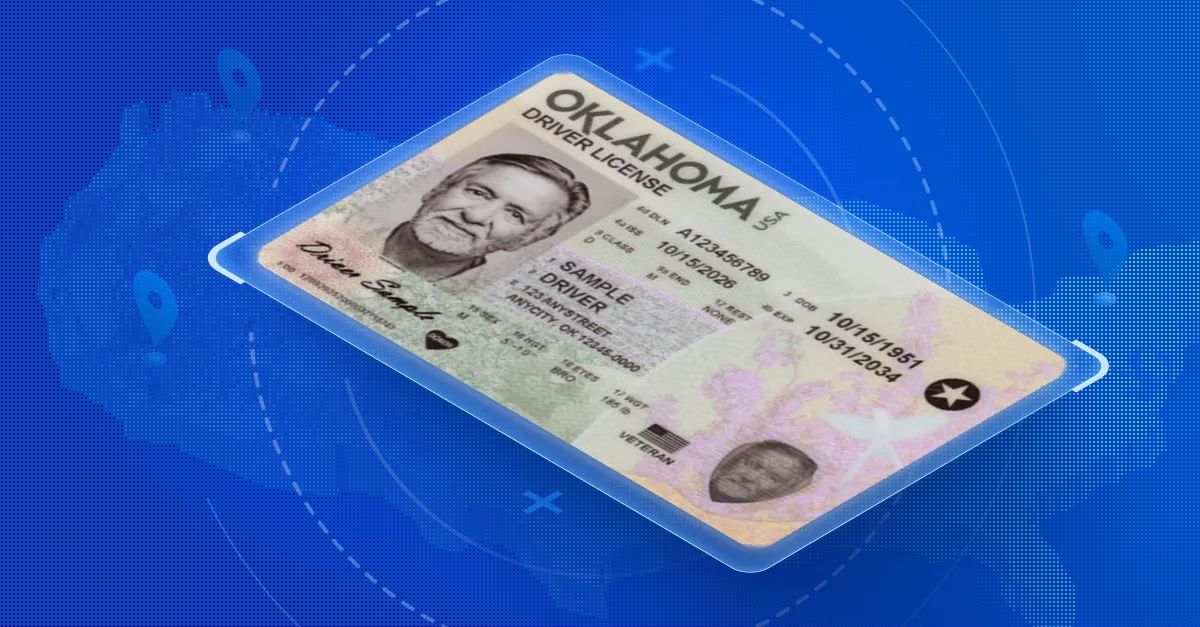

The State of Oklahoma has officially introduced a redesigned drivers license and state ID credential as part of a broader modernization of services through Service Oklahoma. The update reflects a significant investment in both security and user experience, aligning Oklahoma’s credentials with evolving national standards for identity protection while incorporating design elements that reflect the state’s heritage.
This redesign is not simply cosmetic. It represents a structural upgrade to the materials, production process, and security features embedded within Oklahoma’s identification cards.
A stronger Oklahoma ID
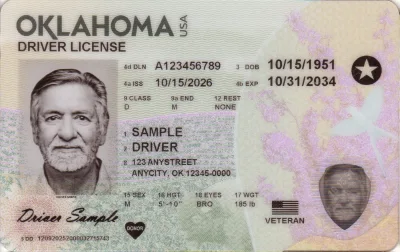

New security features on the Oklahoma ID
- New durable, tamper-resistant material
- Enhanced elements to deter counterfeiting
- REAL ID compliant
New design elements on the Oklahoma ID
- Prominent Oklahoma imagery, including bison, scissor-tailed flycatcher, and the redbud tree
- Windowpane feature
- Print color differentiation for at-a-glance distinction between drivers license and ID cards
Beginning February 17, 2025, residents will be able to choose between a REAL ID-compliant credential and a standard license or ID version of the new Oklahoma format. Existing credentials remain valid until their printed expiration dates, and individuals will receive the updated design upon renewal or replacement at no additional cost.
What changed from the previous Oklahoma ID format?
Before this update, Oklahoma’s driver licenses and state IDs followed a more traditional, utilitarian design. While secure and compliant, the earlier format featured fewer advanced visual and material security enhancements compared to the newly released version.
The 2026 redesign introduces stronger anti-counterfeit protections, upgraded card stock, and more dynamic state-themed imagery. These updates align Oklahoma with a broader national trend of states modernizing ID credentials to address increasingly sophisticated identity fraud tactics.
Why this matters for identity verification
State-issued credentials remain the primary identity document used across financial services, logistics, retail, age-restricted sales, and regulated industries. Any change in format, particularly one involving updated security features, carries implications for organizations that rely on ID verification.
New materials and embedded security elements are designed to reduce forgery and tampering. However, businesses must ensure their ID scanning technology and verification processes can properly authenticate the new format. Failure to update systems can lead to false negatives, operational delays, or increased fraud risk.
Credential modernization efforts like this reflect the growing recognition that identity fraud continues to evolve. As counterfeit production methods become more sophisticated, states must respond with layered security designs and improved production standards.
Will ID scanning still work on the new Oklahoma ID
Yes. Both VeriScan and ParseLink will continue being able to read and parse the new Oklahoma ID format, ensuring business continuity without a lapse in service.
Bottom Line
Oklahoma’s newly released drivers license and ID format represents a meaningful step forward in credential security and service modernization. With enhanced durability, advanced anti-counterfeit protections, and a refined visual design rooted in state identity, the new credential is built to meet today’s verification demands.
As other states continue to update their formats, organizations that rely on ID verification should remain proactive in monitoring changes and adapting their systems accordingly. Identity documents are evolving, and verification strategies must evolve with them.