Skip to content


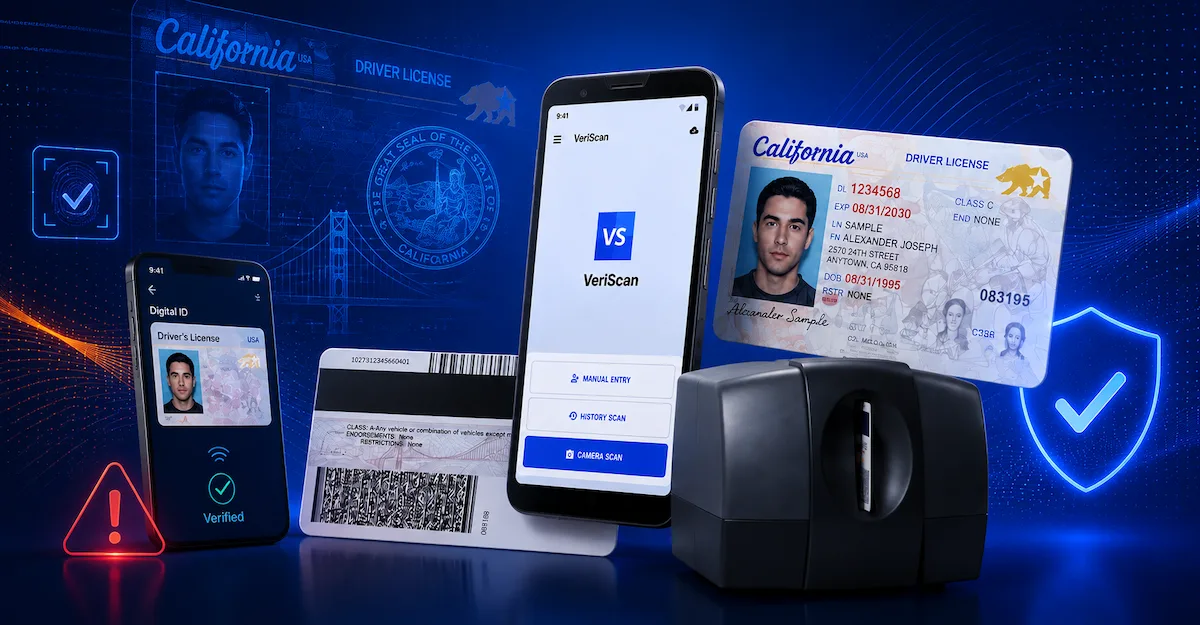

The fake driver’s license has come a long way from the poorly laminated novelty IDs that once circulated on college campuses. Today, counterfeit identity documents are often produced using commercial-grade printing equipment, sophisticated graphic design software, and detailed knowledge of government-issued credentials. Many are convincing enough to deceive even experienced employees during a brief visual inspection.
While underage alcohol purchases are still a common use case for fake IDs, the broader landscape of driver’s license fraud has changed dramatically. Organized criminal groups now rely on forged and altered identity documents to facilitate everything from financial fraud and synthetic identity schemes to cargo theft, account takeover, employment fraud, and large-scale retail crime. In many of these cases, the driver’s license is not the end goal, it’s the key that unlocks access to valuable goods, services, and financial accounts.
This evolution has changed what businesses should expect from an identity verification process. A quick glance at a driver’s license may have been sufficient years ago, but today’s counterfeit documents are specifically designed to pass visual inspection. As a result, organizations across banking, retail, logistics, hospitality, gaming, and government are increasingly adopting layered identity verification technologies that can validate both the data encoded on an ID and the authenticity of the document itself.
Understanding how driver’s licenses are forged is the first step toward recognizing why modern verification methods have become so important.
Why driver’s licenses are such valuable targets
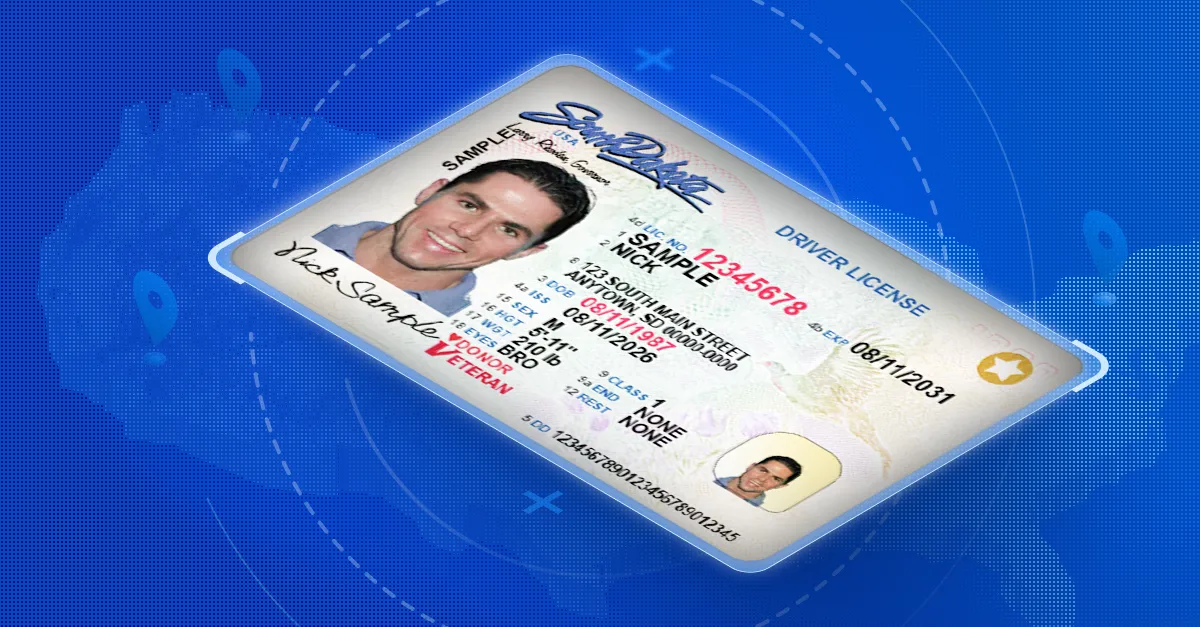
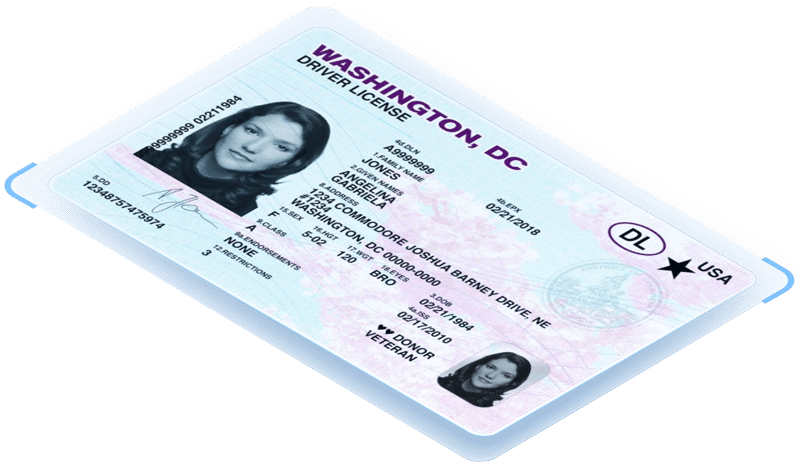
Few identity documents are as widely accepted as a driver’s license. For most Americans and Canadians, it serves as their primary form of government-issued identification and is routinely used to verify age, identity, residency, and driving privileges. Because businesses and government agencies trust these credentials every day, they have become one of the most attractive targets for fraudsters.
A convincing driver’s license can be used to open financial accounts, rent vehicles, purchase age-restricted products, gain access to secure facilities, collect high-value shipments, apply for loans, or impersonate another individual during a variety of transactions. In many fraud schemes, presenting a believable ID is enough to overcome the first, and often only, layer of identity verification.
Criminals understand this. Rather than attacking sophisticated cybersecurity systems, they frequently exploit something much simpler: the assumption that a government-issued driver’s license must be genuine.
As counterfeit production techniques continue to improve, businesses can no longer assume that a professionally printed credential is authentic simply because it looks convincing. Modern fake IDs are designed to imitate the visual appearance of legitimate licenses while concealing subtle inconsistencies that are difficult for the human eye to detect.
How fraudsters create counterfeit driver’s licenses
The term “fake ID” is often used as though all fraudulent driver’s licenses are created the same way. In reality, criminals employ several different techniques depending on their objectives, available resources, and the type of fraud they intend to commit. Some methods involve manufacturing an entirely new credential, while others rely on altering a legitimate license or combining authentic information with fabricated identity details.
Understanding these different approaches helps explain why no single verification technique can detect every type of fraud.
Completely counterfeit licenses
The most recognizable form of driver’s license fraud is the completely counterfeit ID. These fake IDs are created from scratch to imitate a legitimate government-issued license as closely as possible.
Modern counterfeit operations begin by studying authentic licenses in extraordinary detail. High-resolution images of genuine credentials allow designers to replicate layouts, typography, color gradients, background artwork, and other visible design elements with remarkable accuracy. Once a digital template has been created, the document is printed onto plastic card stock that closely resembles the material used by government licensing agencies.
Many counterfeit licenses also attempt to reproduce the security features that people naturally associate with authentic identification. Simulated holographic overlays, ghost portraits, ultraviolet graphics, laser engraving effects, and microtext may all be incorporated into the design, not necessarily because they can withstand forensic examination, but because they create the impression of legitimacy during a quick visual inspection.
Some counterfeit documents are surprisingly convincing. Others contain subtle errors, such as incorrect spacing, outdated templates, missing security features, or inconsistencies in the placement of text and graphics. These small discrepancies are often difficult for employees to recognize without specialized training, particularly when every jurisdiction issues licenses with different layouts and security elements.
Altering genuine driver’s licenses
Not every fraudulent credential begins as a counterfeit. In many cases, criminals modify an authentic driver’s license that was legitimately issued by a government agency.
Because the underlying document is genuine, many of its built-in security features remain intact. This makes altered licenses particularly challenging to identify through visual inspection alone.
The modifications typically focus on changing the information that enables a specific type of fraud. A fraudster may replace the photograph to impersonate another individual, adjust the date of birth to bypass age restrictions, change the expiration date, or alter identifying information such as a name or address. Advances in digital editing software have made these changes increasingly difficult to detect, especially after the modified document has been professionally reprinted or relaminated.
Unlike a completely counterfeit ID, an altered license starts with an authentic credential. That distinction often allows it to retain many of the physical characteristics employees are trained to look for, making additional forms of identity verification especially valuable.
Manipulating the PDF417 barcode
One of the most overlooked aspects of driver’s license fraud is the barcode printed on the back of nearly every North American credential. While many businesses scan this barcode to verify age or populate customer information, relatively few people understand what it actually contains, or how criminals attempt to exploit it.
The PDF417 barcode stores standardized identity data based on specifications developed by the American Association of Motor Vehicle Administrators (AAMVA). Depending on the issuing jurisdiction, it may include information such as the cardholder’s name, address, date of birth, license number, issuing authority, expiration date, and document version.
Because the barcode cannot be interpreted by the human eye, fraudsters sometimes manipulate it independently of the information printed on the front of the license. In some cases, they copy barcode data from a legitimate credential while changing the visible information on the card. In others, they generate entirely new barcode data that appears structurally valid but contains fabricated identity information.
A driver’s license may therefore appear legitimate at first glance while encoding data that tells a very different story. This is one of the primary reasons modern ID scanning software does far more than simply display the information stored in the barcode.
Digital editing and document recreation
Some fake ID operations take a hybrid approach by starting with a scan or high-resolution photograph of a genuine driver’s license. Instead of designing an entirely new template, they digitally edit the original image before reproducing it as a physical credential.
Using commercially available image editing software, fraudsters can replace personal information, substitute photographs, modify dates, and recreate portions of the document that have been altered. Because they are working from a legitimate license, many design elements already match the official credential, reducing the amount of work required to produce a convincing forgery.
Although these documents often look authentic, digital recreation can introduce subtle inconsistencies. Fonts may not perfectly match the issuing agency’s specifications, spacing may shift slightly, or fine security details may become distorted during the editing and printing process. Individually these flaws may seem insignificant, but collectively they can indicate that a document has been manipulated.
Synthetic identity documents
Not all fraudulent driver’s licenses are designed to impersonate an existing person. Some are created to support entirely new identities that combine real and fabricated information.
Known as synthetic identity fraud, this technique often begins with a legitimate piece of personal information, such as a valid Social Security number, that is combined with a fictitious name, address, or date of birth. Over time, criminals use this synthetic identity to establish credit histories, open financial accounts, or obtain government-issued documents.
A counterfeit driver’s license becomes an important piece of evidence supporting that fabricated identity. Once accepted during an onboarding process, it helps reinforce the illusion that the synthetic identity belongs to a real individual.
Synthetic identity fraud has become one of the fastest-growing forms of financial crime because it can remain undetected for extended periods while appearing legitimate across multiple systems.
Why visual inspection alone is no longer enough
For decades, the first line of defense against fake IDs was simple: train employees to look closely at the driver’s license. Staff were taught to compare the photograph to the person presenting the credential, verify the date of birth, examine the expiration date, and look for obvious signs of tampering. While these practices are still important, they are no longer sufficient on their own.
Modern driver’s licenses have become increasingly sophisticated. Every U.S. state, Canadian province, and territory incorporates its own combination of security features, layouts, typography, color schemes, and document materials. Many jurisdictions also update their credential designs every few years to stay ahead of counterfeiters. As a result, there is no single “correct” driver’s license appearance for employees to memorize.
A cashier, hotel clerk, financial services representative, or security guard may encounter licenses from dozens of jurisdictions in a single week. Expecting them to recognize the subtle security differences between every version of every credential is unrealistic, particularly when most identity checks are completed in less than a minute.
Criminals understand these limitations. They know that employees are often balancing customer service with fraud prevention and that few organizations have the time or resources to provide forensic document examination training. Counterfeiters therefore focus on creating IDs that appear authentic during a quick inspection, knowing that many transactions will proceed without additional verification.
This doesn’t mean visual inspection has become obsolete. Employees should still compare the photograph to the individual presenting the ID, look for signs of physical damage or tampering, and remain alert for suspicious behavior. However, visual inspection is most effective when it serves as one layer of a broader identity verification strategy rather than the only safeguard.
The growing complexity of driver’s license security features
One reason counterfeit detection has become more challenging is that legitimate driver’s licenses now contain an impressive range of security features. These elements are designed to make documents difficult to reproduce while allowing trained examiners to distinguish authentic credentials from counterfeits.
Depending on the issuing jurisdiction, a modern driver’s license may include holographic overlays, laser engraving, ultraviolet (UV) graphics, microprinting, ghost portraits, tactile elements, optically variable inks, transparent windows, or intricate background patterns. Many of these features are intentionally subtle and can only be verified under specific lighting conditions or with specialized equipment.
While counterfeit operations have become increasingly adept at simulating these features, reproducing them perfectly remains difficult. A fake hologram may have the wrong design, microtext may become unreadable when magnified, or a laser-engraved image may simply be printed onto the card instead of being permanently embedded within the material.
The challenge is that these differences are often too subtle to detect during a routine transaction. Employees rarely have access to magnification devices or UV light sources, and they are unlikely to know exactly how every state’s security features should appear. As counterfeit quality improves, businesses need technologies that can evaluate credentials more consistently than the human eye alone.
How 2D barcode ID scanning works
While the front of a driver’s license is designed for people to read, the back of the credential contains information intended for computers. Most North American driver’s licenses feature a two-dimensional PDF417 barcode, which stores standardized identity data in a machine-readable format.
The information encoded within this barcode follows specifications established by the American Association of Motor Vehicle Administrators (AAMVA). Although individual jurisdictions may include additional fields, the barcode typically contains core information such as the cardholder’s name, address, date of birth, driver’s license number, issuing jurisdiction, document expiration date, and other standardized data elements.
When an ID scanner reads the barcode, it decodes this information almost instantly. Unlike manual data entry, which can introduce typing errors or inconsistencies, barcode scanning captures the information exactly as it was encoded by the issuing authority. This allows businesses to verify age, populate customer records, streamline visitor registration, or complete onboarding workflows in just a few seconds.
For many organizations, this operational efficiency is reason enough to adopt ID scanning. However, the barcode can provide much more than convenience when it is paired with intelligent validation.
Barcode validation goes beyond reading the data
Simply decoding a barcode is only the first step. Modern identity verification platforms, like VeriScan Identity Platform, also evaluate whether the information stored inside the barcode is internally consistent and follows established formatting standards.
For example, advanced barcode validation can determine whether the barcode conforms to AAMVA specifications, whether required data fields are present, and whether the encoded information matches what appears on the front of the driver’s license. If the printed date of birth differs from the encoded date of birth, or if the barcode structure contains formatting anomalies, the software can immediately alert the user that the credential deserves closer inspection.
This type of validation helps identify many counterfeit and altered driver’s licenses that might otherwise appear legitimate. A fraudster may successfully replicate the visual appearance of a license while overlooking inconsistencies within the barcode, or intentionally manipulate the barcode in ways that are invisible without automated decoding.
Another significant advantage is consistency. Unlike human reviewers, ID scanning software evaluates every scanned credential using the same rules and standards, reducing the likelihood that suspicious documents will be accepted simply because an employee is rushed or unfamiliar with a particular state’s license design.
For businesses processing hundreds or even thousands of identity documents each day, this consistency can substantially reduce both operational errors and fraud risk.
Why barcode scanning alone cannot detect every fake ID
Despite its many advantages, barcode validation is not a complete solution to driver’s license fraud. Sophisticated counterfeiters have become increasingly aware that businesses rely on barcode scanning, and many now design fake IDs specifically to pass basic barcode checks.
Some counterfeit licenses contain barcodes copied directly from legitimate credentials. Others are generated using software that produces barcode data formatted according to AAMVA standards. If the information encoded within the barcode is internally consistent, an ID scanner that only decodes the barcode may not recognize that the physical document itself is fraudulent.
This illustrates an important distinction in identity verification. Barcode validation confirms that the data stored within the barcode appears valid and properly formatted, but it does not necessarily confirm that the physical credential is authentic.
Imagine a counterfeit driver’s license that accurately reproduces the state’s design, contains a professionally printed photograph, and includes a properly formatted barcode with matching information. From the perspective of a basic barcode reader, nothing appears unusual. Yet the document itself may still be counterfeit because it lacks authentic security features or was never issued by the licensing authority.
As counterfeit production continues to improve, businesses increasingly need a second layer of ID verification that evaluates the document itself rather than relying solely on the information encoded in the barcode.
That is where ID authentication becomes essential.
How ID authentication verifies the driver’s license itself
While barcode validation focuses on the data encoded within a driver’s license, ID authentication examines the credential itself. Rather than asking, “Can this barcode be read?” authentication technology asks a much broader question: “Does this document appear to be a genuine government-issued driver’s license?”
This distinction is important because a counterfeit ID can contain a properly formatted barcode while still being a fraudulent document. Likewise, an altered license may retain many of its original physical characteristics even after key pieces of information have been changed. Looking only at the barcode, or only at the printed information, provides an incomplete picture.
Modern ID authentication solutions, when combined with an authentication capable ID scanner, analyze multiple aspects of a credential simultaneously. Depending on the technology being used, the software may compare the document against known templates, evaluate the placement of security features, inspect typography and layout, assess image quality, identify signs of digital manipulation, and verify that the information displayed on the front of the credential is consistent with the data encoded in the barcode.
Rather than relying on a single indicator, ID authentication builds confidence by evaluating numerous characteristics together. A document that appears authentic at first glance may contain small inconsistencies that become obvious when examined through automated analysis.
Why layered identity verification is more effective
No single ID verification method can detect every type of driver’s license fraud. Criminals use a wide range of techniques, and each technique attempts to exploit a different weakness in the verification process.
A visually convincing counterfeit ID may contain an invalid barcode. An altered license may retain authentic security features while displaying modified personal information. A synthetic identity may be supported by a professionally produced credential that appears legitimate during a quick inspection.
For this reason, organizations are increasingly adopting layered identity verification, where multiple technologies work together instead of relying on a single check.
A typical verification process begins by scanning the driver’s license to decode the information stored in the PDF417 barcode. The software validates that the barcode follows AAMVA standards and compares the encoded data to the information printed on the front of the credential. From there, ID authentication analyzes the document itself, looking for evidence of tampering, counterfeit production, or inconsistencies with known document templates.
Each step answers a different question.
- Barcode validation helps determine whether the encoded identity data appears legitimate and internally consistent.
- ID authentication evaluates whether the physical credential itself appears genuine.
Together, these technologies provide a far more comprehensive assessment than either method can achieve independently.
The future of driver’s license fraud
Counterfeit driver’s licenses will continue to evolve alongside advances in printing technology, artificial intelligence, and digital document creation. The same innovations that allow governments to improve credential security also create new opportunities for criminals to study, imitate, and manipulate identity documents.
At the same time, digital identity credentials such as mobile driver’s licenses (mDLs) and digital identity wallets are beginning to change how individuals prove their identity. These technologies offer new opportunities to improve security through cryptographic verification and secure digital exchanges, but physical driver’s licenses will remain an essential part of identity verification for years to come.
For businesses, this means preparing for a future where both physical and digital credentials must be verified securely and consistently. Organizations that invest in flexible identity verification technologies today will be better positioned to adapt as identity documents continue to evolve.
As fraud techniques continue to evolve, businesses that rely on layered identity verification will be better equipped to reduce losses, improve compliance, and make more informed trust decisions. Rather than asking employees to become document experts, organizations can use technology to provide consistent, accurate identity verification across every transaction.