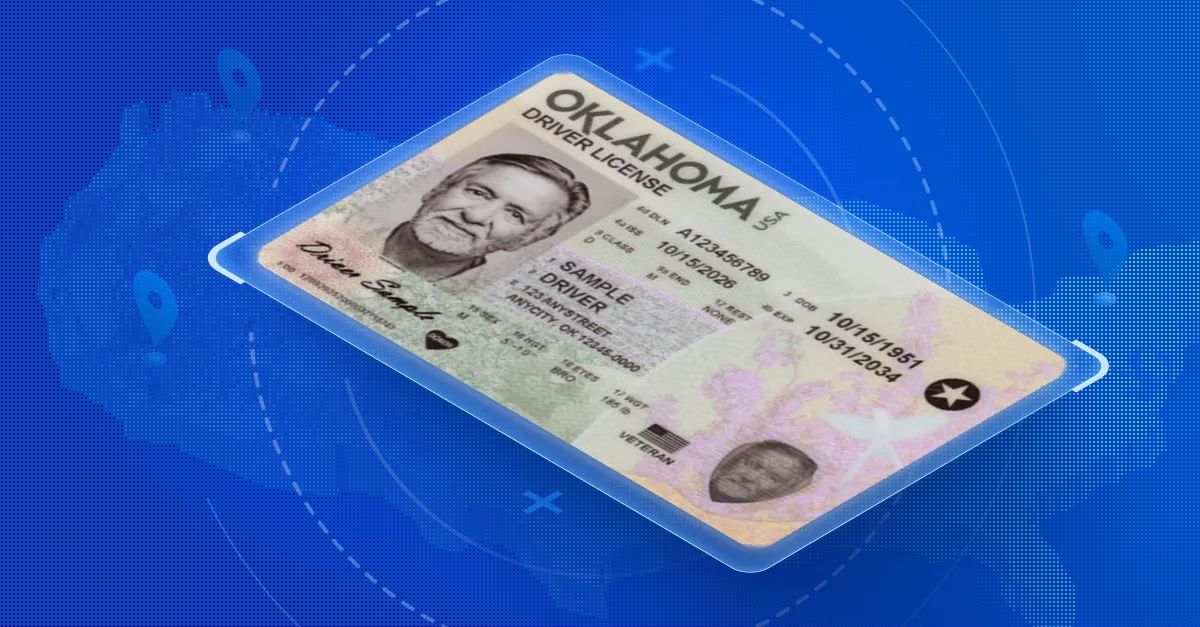
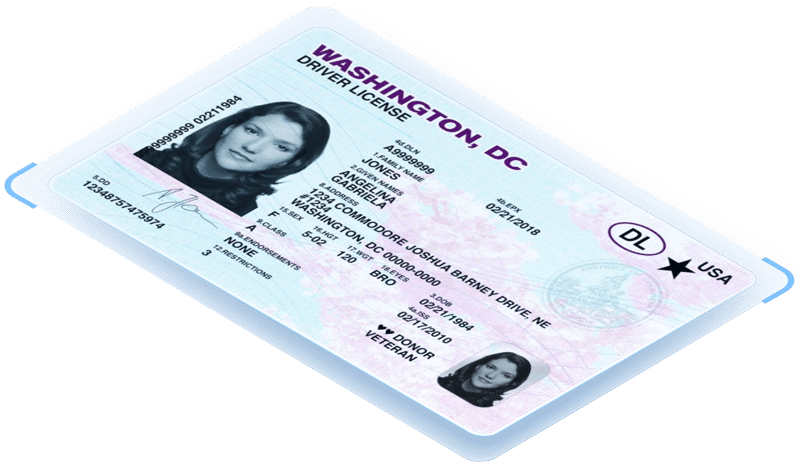
In today’s world of increasingly sophisticated identity fraud, U.S. driver’s licenses and ID cards have evolved into high-security documents packed with layered anti-fraud technologies. One such security feature that’s both subtle and powerful is micro-perforation, a series of tiny laser-drilled holes that form specific patterns or images on the card. These micro-perforations aren’t always visible at first glance but can be seen when holding the ID up to a light source, or by using ID scanning technology, and they are extremely difficult for counterfeiters to duplicate accurately. In this deep dive, we’ll explain what micro-perforations are, why they matter, which states incorporate them, and how you can validate these IDs.
What are micro-perforations
Micro-perforations are tiny, precisely made holes etched through the card material (typically via laser) that create a design, outline, or signature shape unique to a State’s ID. Unlike printed images or holograms, these features rely on structural manipulation of the card substrate itself, which makes them much harder to fake with standard printing or scanning equipment.
When a legitimate ID with micro-perforations is held up to a light source, the pattern becomes visible as a silhouette or outline. This method provides an overt security feature, one that doesn’t require UV lights, magnification, or specialized hardware to detect, yet still raises the bar significantly against counterfeit attempts.
Which states use micro-perforations on their IDs
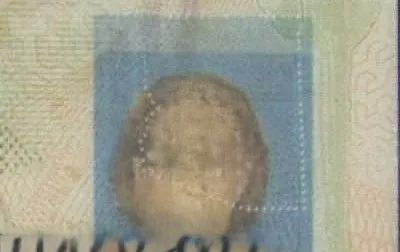

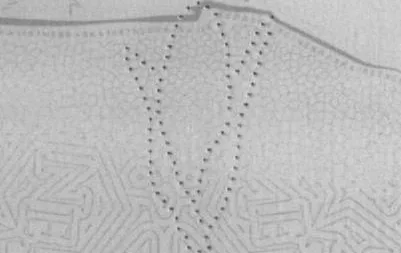
While not every U.S. state publicly lists every security feature of their driver’s licenses for security reasons, a handful of states clearly incorporate laser micro-perforation as a distinct security element in their ID design. Below are examples of states where this feature is either documented by the issuing agency or widely recognized in ID authentication guides.
Micro-perforations on Arizona IDs
In Arizona’s state IDs, particularly those incorporating REAL ID standards, micro-perforation has been referenced as part of the layered security environment. These perforations are designed to represent desert landscape motifs or state emblems when backlit, integrating with holograms and microprint to form a comprehensive security strategy.
Micro-perforations on California IDs
As part of constantly evolving California security features, micro-perforations have been included in the more recent redesigns, often forming shapes such as the California grizzly bear or other state-themed silhouettes when backlit.
Micro-perforations on Florida IDs
Florida’s driver’s licenses have been described as utilizing laser-drilled micro-perforations that reflect themes like the state’s famous beaches or floral icons when the license is placed against light.
Micro-perforations on Georgia IDs
Georgia also features micro-perforation within its driver’s license design, forming state-related imagery such as the peach symbol, that becomes visible only when the card is illuminated from behind.
Micro-perforations on Kansas IDs
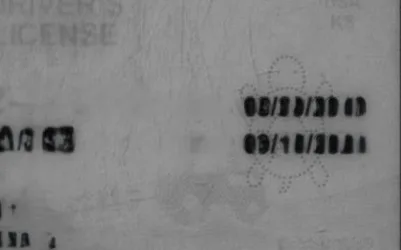
In Kansas, the state’s driver’s licenses incorporate a very distinctive micro-perforation design that’s embedded within the card stock itself. When held up to a bright light source, a series of laser-drilled holes form the shape of the Kansas state reptile, the box turtle. This perforation is rotationally aligned near the upper portion of the card.
Micro-perforations on Massachusetts IDs
Massachusetts is one of the most frequently cited states that use micro-perforated elements in its driver’s licenses and state IDs. According to the Massachusetts RMV, the ID design includes micro-perforations embedded into the card stock, which becomes evident when the ID is held up to light. The micro-perforation on a Massachusetts ID often forms recognizable shapes or outlines tied to the state, but no specific examples have been listed.
Micro-perforations on Nebraska IDs
Nebraska’s newer driver’s licenses and state ID cards include micro-perforations as one of their anti-fraud measures. When held up to light, you may notice a layered perforated image or state outline integrated into the ID’s construction.
Micro-perforations on New York IDs
New York is another example where micro-perforation has been referenced in recent years. On these IDs, micro-perforated holes form precise outlines such as the Statue of Liberty, the state seal, or related symbols when viewed against a bright light.
Because each state’s security strategy is unique, the presence of micro-perforations might vary by ID version and issue date as newer designs replace older ones.
How to validate micro-perforations
Detecting micro-perforation isn’t just about knowing where to look, it’s also about using the right tools to validate the feature reliably and efficiently.
1. Hold the ID to light
The simplest first step in validating micro-perforations is a visual check: hold the ID up to a direct light source. If genuine, the micro-holes should reveal a pattern or outline (often unique to the issuing state).
Pro: This overt check is fast and requires no tools beyond good lighting.
Con: This method leaves room for human error and will become less reliable as fake ID technology continues to adapt.
2. Use an ID scanner for authentication
While micro-perforations are overt and visible without technology, many ID scanners offer backlighting and multi-light inspection that make these micro-holes easier to confirm during validation. Concurrently, these ID scanners also run checks for UV features, holograms, microprint, tactile elements, and 2D barcode integrity against a trained AI-powered software such as VeriScan Identity Platform, leading to a comprehensive assessment of ID authenticity.
Pro: Capable of catching up to 95% of fake IDs.
Con: Requires specialty ID scanning software.
Conclusion
Micro-perforations may not always be the flashiest ID security feature, but they are one of the most effective at preventing counterfeiting, when combined with other technologies such as UV ink, holograms, and microprint. States like the ones mentioned above have incorporated laser micro-perforation into their ID designs, and this feature is increasingly common in newer credential issuances across the country.
VeriScan and ID authentication are designed to detect these elements automatically. AI-powered document analysis leverages hundreds of ID templates, allowing the software to recognize state-specific security features instantly, even those not made available to the general public.
Whether you are running a business that verifies IDs regularly or managing compliance in a high-security environment, understanding how to identify and validate micro-perforations is an essential part of a comprehensive ID authentication strategy.