
ID scanning technology has become a cornerstone of modern identity verification. Once limited to niche use cases like border patrol and air travel, ID scanners are now widely adopted across industries, from retail and hospitality to banking, logistics, and age-restricted businesses.
As fraud tactics become more sophisticated and regulatory requirements continue to evolve, organizations are increasingly turning to ID scanning solutions to automate data capture, reduce human error, and strengthen identity verification processes. Whether verifying a customer’s age, onboarding a new user, or preventing fraudulent transactions, ID scanning provides a fast, accurate, and scalable solution.
What is an ID scanner?
An ID scanner is a device or software solution that captures, extracts, and verifies data from government-issued identification documents such as driver’s licenses, state IDs, and passports.
Modern ID scanning solutions go beyond simple data capture. They leverage technologies like barcode reading, optical character recognition (OCR), and document authentication to validate the legitimacy of an ID in real time. This allows businesses to move from manual inspection to automated, data-driven verification.
How ID scanning works
ID scanning typically follows a structured process: capture, extract, and verify.
Data capture
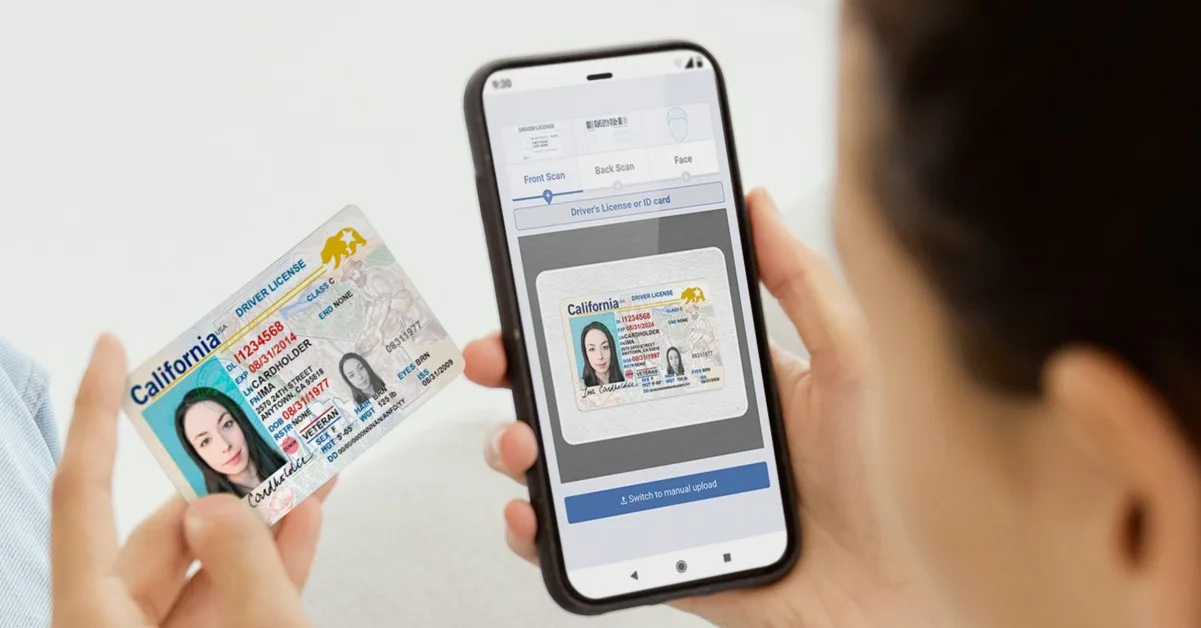
The first step involves scanning the data from a barcode or MRZ using a dedicated ID scanner, mobile device, or integrated camera system.
Data extraction
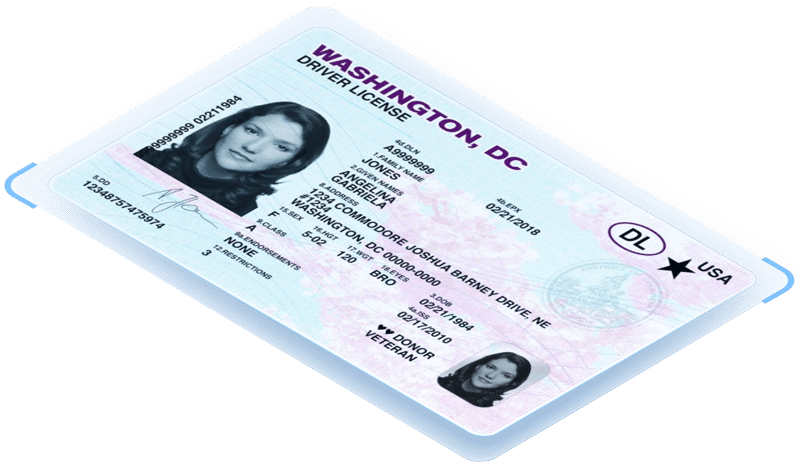
Once the barcode or MRZ are captured, the system extracts data using OCR and barcode decoding. Most North American driver’s licenses, for example, contain a PDF417 barcode that encodes key identity data such as:
- Full name
- Date of birth
- Address
- ID number
- Expiration date
This automated extraction eliminates the need for manual data entry and significantly reduces errors.
Verification & authentication
After extraction, the system validates the data by cross-referencing multiple elements of the ID. This may include comparing barcode data to printed text, checking formatting rules, and analyzing known security features.
More advanced solutions can also incorporate facial matching, comparing the ID photo to a live image to confirm the individual presenting the ID is the rightful owner.
What data can ID scanners capture?
ID scanners are capable of capturing and structuring a wide range of identity data, including:
- Personal identifying information (name, DOB, address)
- Document details (ID number, issuing state, expiration date)
- Barcode data (PDF417 and other formats)
- Magnetic stripe data (on certain IDs)
- Visual security features
By structuring this data in real time, businesses can instantly integrate it into existing systems such as POS platforms, CRMs, or compliance tools.
Key business use cases for ID scanning
ID scanning technology supports a wide variety of operational and compliance-driven use cases across industries.
Age verification
For businesses that sell age-restricted products, such as alcohol, cannabis, tobacco, and vapes, ID scanners provide a fast and reliable way to verify legal age without impeding customer flow. Automated checks reduce the risk of human error, help ensure compliance with local regulations, and can even act as an affirmative defense in applicable states.
Customer onboarding & KYC
Financial institutions, online platforms, and service providers use ID scanning to streamline customer onboarding. Automated data capture accelerates Know Your Customer (KYC) processes while improving accuracy and auditability.
Fraud prevention
ID scanning plays a critical role in detecting fake or altered IDs. By authenticating ID data and analyzing document structure, businesses can identify suspicious IDs before they lead to fraud or loss.
Hospitality & access management
Hotels, event venues, and secure facilities use ID scanning to manage guest check-ins and control access management. This not only improves efficiency but also enhances security for guests and staff alike by maintaining accurate visitor records.
Logistics & cargo
In industries like logistics and freight, verifying identity is essential for preventing cargo theft and fraud. ID scanning and identity verification ensure that individuals picking up cargo or handling goods in warehouses are properly authenticated.
Types of ID scanning solutions
Organizations can choose from several types of ID scanning solutions depending on their operational needs:
- Desktop ID scanners: Ideal for fixed locations such as retail counters and reception desks
- Mobile ID scanning: Enables verification via smartphones or tablets for remote or on-the-go use
- Embedded scanning systems: Integrated into kiosks, turnstiles, or self-service environments
- Software SDKs: Allow developers to embed ID scanning directly into mobile apps or web platforms
Each approach offers different advantages in terms of mobility, scalability, and depth of ID verification.
Why businesses are investing in ID scanning
The adoption of ID scanning technology is being driven by several key benefits. ID scanning can capture and process data in seconds, dramatically reducing wait times and improving customer experiences while the automated extraction eliminates manual entry errors, ensuring consistent and reliable data across systems. Reducing manual processes also allows staff to focus on higher-value tasks, improving overall efficiency.
By validating multiple data points and analyzing ID structure, ID scanning provides a higher level of protection against fake and altered IDs. Automated ID verification helps businesses to streamline the customer experience while meeting regulatory requirements related to age verification, KYC, and recordkeeping.
The future of ID scanning
As digital transformation continues, ID scanning is increasingly moving beyond physical environments into mobile and online experiences as both a convenience and a legal requirement in certain instances.
As concerns about children’s safety online continue to grow, lawmakers in the United States are advancing new legislation designed to hold digital platforms accountable for how their products affect young users. Among the most significant proposals is theKids Online Safety Act (KOSA), a bipartisan effort aimed at protecting minors from harmful online experiences and improving transparency across social media and digital platforms.
This digital shift enables secure, frictionless interactions, whether onboarding a new customer online, verifying identity in the field, or performing age verification for digital compliance.
Final Thoughts
ID scanning technology has evolved into a critical tool for businesses that need to balance speed, security, and compliance. By automating identity verification, ID scanners reduce fraud risk, improve operational efficiency, and deliver a more seamless customer experience.
As identity verification continues to play a central role in business operations, investing in robust ID scanning solutions is essential for staying competitive and secure in today’s environment.