
Digital account takeover gets most of the headlines, but some of 2026’s most brazen bank fraud happened face-to-face, at the teller line. From Maine to Texas to Ontario, fraudsters walked into bank branches and credit unions with counterfeit driver’s licenses, fake military IDs, and forged passports, then asked for someone else’s money.
Some were caught because a teller noticed something off. Others walked out with tens of thousands of dollars before anyone realized the ID in front of them wasn’t real. Below, we’ve rounded up notable in-branch ID fraud cases reported in 2026, what they have in common, and what financial institutions can do to stop the next one.
2026 In-Branch ID Fraud Cases
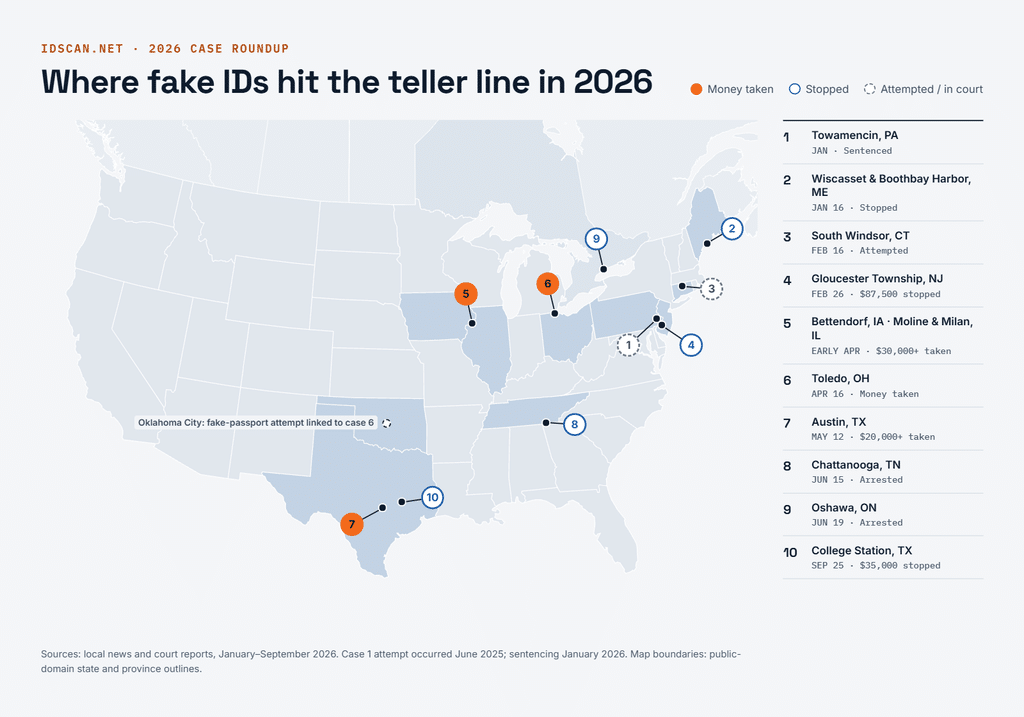
January: Florida man sentenced for Citizens Bank impersonation in Towamencin, PA
In January 2026, an Orlando man was sentenced to 3 to 23 months in jail for trying to take over another customer’s account at a Citizens Bank branch in Towamencin Township. He presented a Massachusetts driver’s license in the victim’s name and tried to change the phone number on the account. Police later found the license was fraudulent, with an expiration date and license class that didn’t match state DMV records. He also had active warrants in Florida and Texas.
January 16: Fake military ID used at two Maine banks in 30 minutes
A man impersonating a real customer tried to withdraw $6,700 from the victim’s account at First National Bank in Wiscasset, Maine, using a fake military ID. He left when he couldn’t answer the account’s security questions. About 30 minutes earlier, he had tried the same thing at a bank in Boothbay Harbor with the same victim’s information. Police stopped him and two other men, all from Brooklyn, NY, near a bank in Brunswick. All three were carrying fake passports, military IDs, and state-issued licenses, plus notes with sensitive customer information that suggested more victims.
February 16: Wig and fake ID at a Connecticut credit union
A Brooklyn woman wearing a wig used a fake ID to try to withdraw money from someone else’s account at American Eagle Federal Credit Union in South Windsor, Connecticut.
February 26: $87,500 transfer stopped at Fulton Bank in Gloucester Township, NJ
A 64-year-old Houston man used a fake driver’s license to impersonate a customer at a Fulton Bank branch and tried to transfer $87,500 out of the victim’s account. Bank employees flagged the suspicious transaction, police intervened, and no money left the account. He was charged with forgery and attempted theft by deception.
Early April: $30,000+ taken from three Quad Cities credit unions
During the first week of April, a woman visited credit unions in Bettendorf, Iowa, and Moline and Milan, Illinois. At each one, she handed tellers fake ID cards built on stolen identities. She walked away with more than $30,000 in cash.
April 16: Toledo withdrawal, with a fake passport attempt in Oklahoma
A suspect used a fake ID to withdraw money from a victim’s account at a Toledo, Ohio, bank. The same suspect is also wanted in Oklahoma City for trying to withdraw money with a fake passport.
May 12: More than $20,000 withdrawn at two Frost Bank branches, Austin, TX
A suspect used a fake ID to withdraw more than $20,000 from a victim’s account across two Frost Bank locations in Austin.
June 15: Check-cashing attempt with fake ID, Chattanooga, TN
A suspect was arrested after trying to cash a check at a Chattanooga bank using a fake ID.
June 19: New account fraud at Scotiabank, Oshawa, Ontario
Durham Regional Police arrested a 39-year-old man who tried to open an account with fraudulent identification at a Scotiabank branch in Oshawa. Police say he had tried to open accounts at multiple banks in the city.
September 25: $35,000 withdrawal attempt, College Station, TX
A 55-year-old Houston man presented account information and a fake Louisiana driver’s license at MidSouth Bank and asked to withdraw $35,000. Suspicious employees called the real account holder, who confirmed he wasn’t at the bank. The suspect kept using the name on the fake license before admitting his real identity. He also had an outstanding theft warrant out of Harris County.
What these ID fraud cases have in common
The fraudster is usually impersonating a real customer. In most of these cases, the ID carried the victim’s real name and details. The fraudster already had account information, so the only thing standing between them and the money was the teller’s ability to tell a fake ID from a real one.
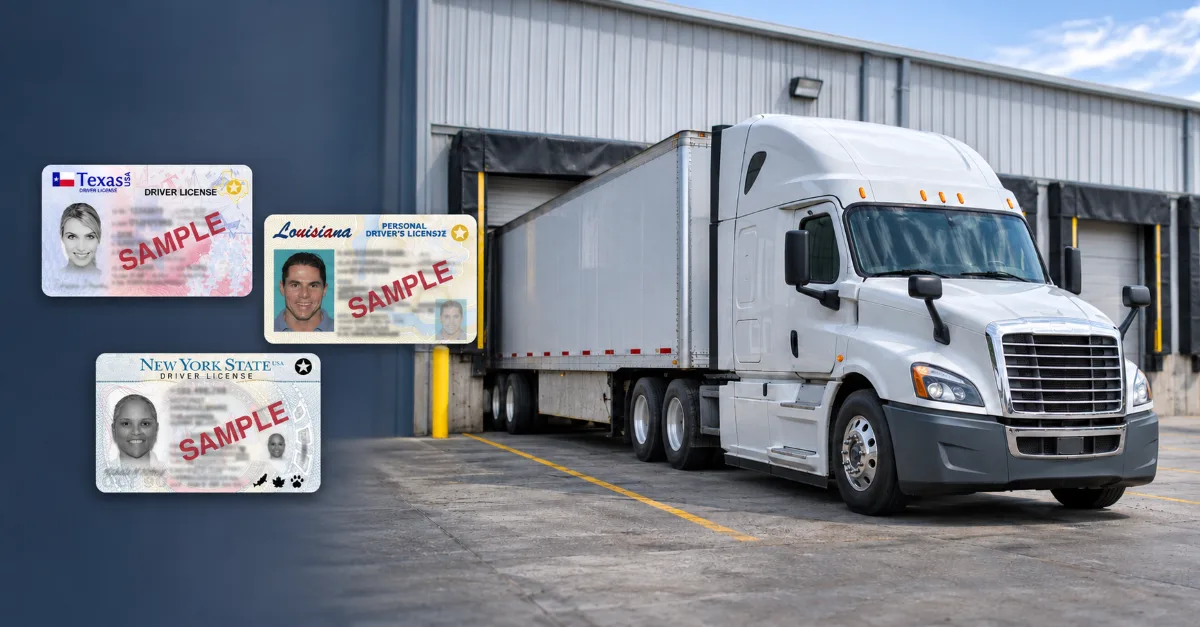
The fake IDs look good enough to pass a glance. Fraudsters used counterfeit driver’s licenses from out of state, fake military IDs, and forged passports. These are documents tellers see less often and have little way to verify by eye. In Towamencin, the giveaway was an expiration date and license class that didn’t match DMV records, details no one catches without checking.
Many are organized and mobile. Suspects traveled from Brooklyn to Maine and Connecticut, from Houston to New Jersey, and from Florida to Pennsylvania. The Maine crew hit two banks in 30 minutes and carried a full kit of fake passports, military IDs, and licenses. The Quad Cities suspect worked three credit unions across two states in one week.
The amounts are significant. Attempted or completed withdrawals ranged from $6,700 to $87,500 in a single visit. Where the fraud succeeded, in Austin, Toledo, and the Quad Cities, losses ran past $20,000 and $30,000.
When fraud was stopped, it was because a person got suspicious. Security questions in Maine, a phone call to the real account holder in College Station, and an alert teller in Gloucester Township all worked. But each relied on an employee’s instinct, not a consistent check of the ID itself.
How banks and credit unions can stop fake IDs at the teller lane
Visual inspection and security questions are a good last line of defense, but they shouldn’t be the first. Fraudsters increasingly arrive with the victim’s account details, so the ID itself has to be verified, every time, in seconds.
IDScan.net’s VeriScan gives branch staff a fast, consistent way to authenticate IDs at the counter:
- Document authentication: VeriScan checks driver’s licenses, state IDs, passports, and military IDs against security features like the 2D barcode, MRZ, and UV/IR markers, so a well-made counterfeit doesn’t get waved through.
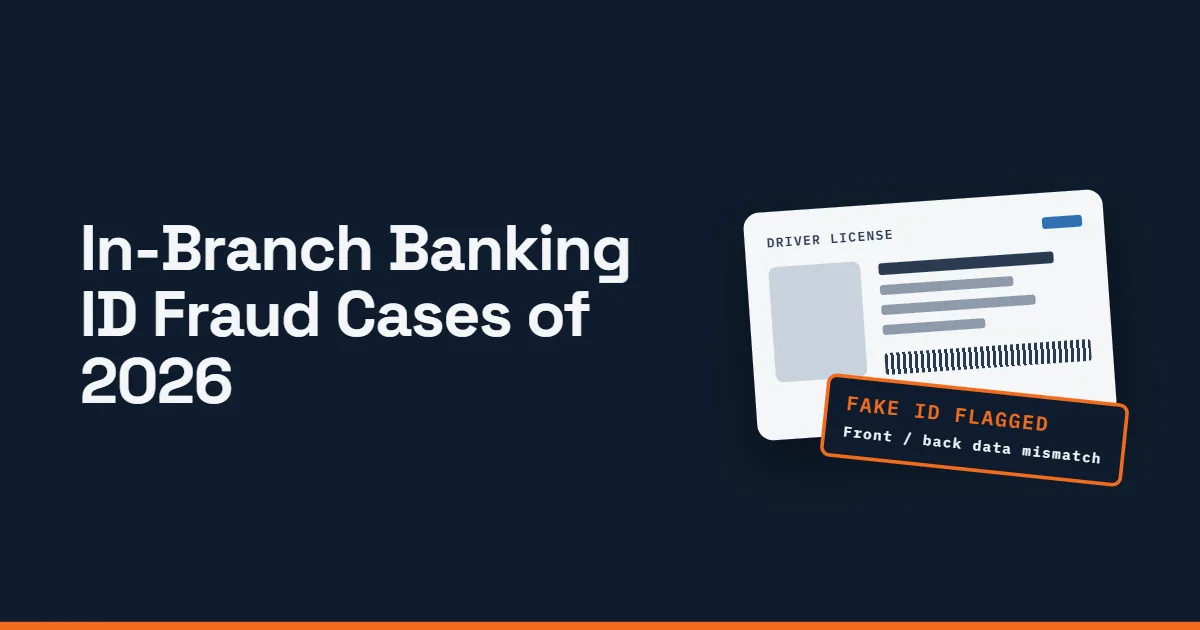
- Front/back crossmatching: Data printed on the front of the card is compared against the encoded barcode on the back. Mismatches, like the inconsistent expiration date and license class in the Towamencin case, are flagged automatically instead of discovered after the fact.
- Face matching: Comparing the person at the counter to the photo on the ID helps catch impostors using a real customer’s identity.
- Repeat offender detection: With VeriScan, institutions can flag the same face appearing under different names across transactions. That’s exactly the pattern behind crews like the one in Maine and serial fraudsters like the Quad Cities suspect, who move from branch to branch using a new identity each time.
The result is a check that doesn’t depend on which teller is working, how busy the lobby is, or whether a branch received the latest fraud bulletin.
Protect your branches before the attempt
Every case on this list started the same way: someone walked up to a teller and handed over an ID. The institutions that stopped the fraud got lucky with an alert employee. The ones that didn’t lost tens of thousands of dollars of their customers’ money.
Schedule a demo today to see how VeriScan helps banks and credit unions authenticate IDs at the teller line.