Skip to content


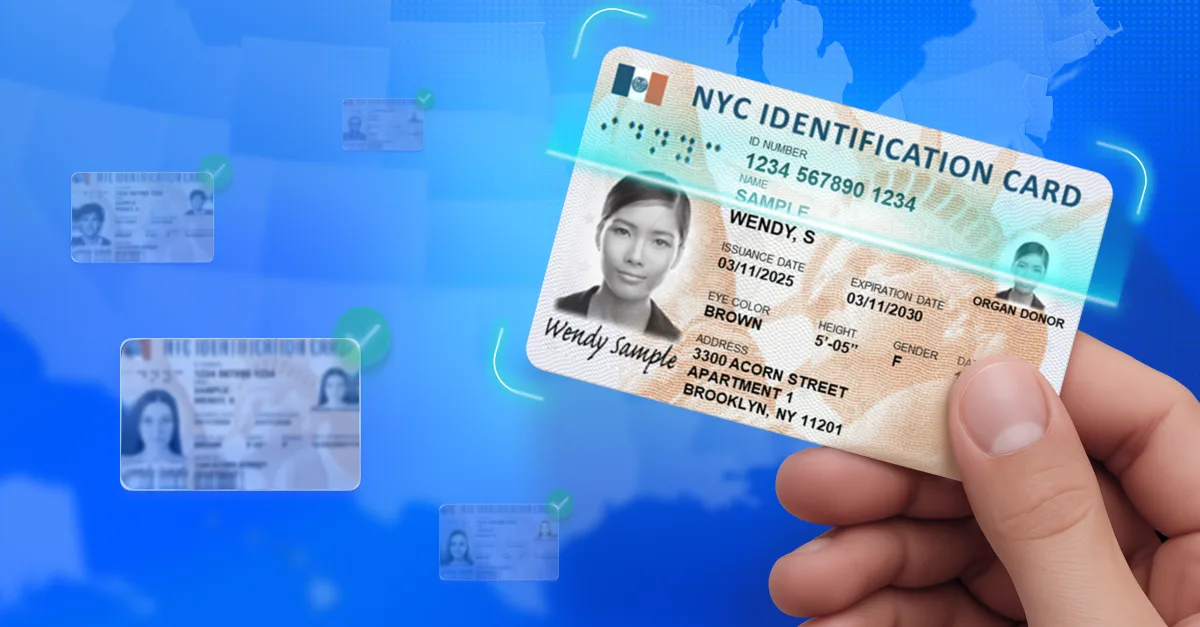

Municipal identification cards have become an increasingly important tool for cities looking to improve access to government services, financial institutions, healthcare, libraries, and community resources. Unlike driver’s licenses or state-issued identification cards, municipal IDs are issued by local governments and are designed to help residents prove their identity and residency within a specific city or county.
Over the past two decades, dozens of municipalities across the United States have launched their own identification programs. While many were initially created to help residents who face barriers obtaining state-issued identification, including immigrants, individuals experiencing homelessness, seniors, formerly incarcerated individuals, and transgender residents whose identity documents may not reflect their current identity, today’s municipal ID programs often serve a much broader population.
Cities have also expanded municipal IDs beyond simple identification cards. Many now function as library cards, transit cards, recreation passes, discount cards, or gateways to city services, making them valuable community resources regardless of immigration status or background.
For businesses, however, municipal IDs can create questions. Can they be used to verify identity? Are they valid for age-restricted purchases? Do they contain machine-readable barcodes? Can they be scanned using ID verification software?
What are Municipal IDs?
A municipal ID is a photo identification card issued by a city or county government rather than a state or federal agency. Unlike driver’s licenses, state identification cards, or U.S. passports, municipal IDs are intended primarily for local use and are designed to help residents access services within the issuing jurisdiction.
Eligibility requirements vary by program, but applicants typically must provide documentation proving both their identity and residency within the city or county. Many municipalities accept a flexible combination of documents, allowing applicants to establish eligibility even if they do not possess traditional forms of government-issued identification.
Municipal IDs are commonly accepted for purposes such as:
- Accessing city buildings and municipal services
- Checking out materials from public libraries
- Opening accounts at participating financial institutions
- Enrolling children in school
- Receiving healthcare services
- Accessing parks and recreation facilities
- Participating in local community programs
- Receiving discounts at participating businesses
Importantly, municipal IDs are not driver’s licenses and generally do not grant driving privileges. They also are not federally recognized identification documents and are not compliant with the REAL ID Act.
Because each municipality designs its own card, there is no nationwide standard governing appearance, security features, accepted documentation, or machine-readable technology.
Why do cities issue Municipal IDs?
Municipal ID programs are often established to address practical challenges faced by residents who have difficulty obtaining traditional government-issued identification. Without an acceptable form of identification, individuals may struggle to access banking services, municipal programs, healthcare, housing assistance, or even basic city resources.
While early municipal ID programs frequently focused on supporting immigrant communities, today’s programs are generally intended to benefit a much broader range of residents.
Municipal IDs may assist:
- Seniors who no longer drive
- Young adults without driver’s licenses
- Individuals experiencing homelessness
- Survivors of domestic violence
- Formerly incarcerated individuals
- People with disabilities
- Residents who prefer not to obtain a driver’s license
- Individuals whose identity documents are being updated after a name or gender marker change
For local governments, municipal ID programs also improve administrative efficiency. Standardized identification helps city agencies verify residency, reduce fraud within municipal benefit programs, streamline access to services, and encourage participation in civic life.
Many programs have evolved into multifunction cards that integrate with libraries, public transportation systems, parks departments, museums, and community organizations, making them useful for a much wider audience than originally envisioned.
How Municipal IDs differ from state-issued IDs
Although municipal IDs often resemble driver’s licenses or state identification cards, they serve a fundamentally different purpose.
State-issued driver’s licenses and identification cards are issued under state law and generally follow standards established by the American Association of Motor Vehicle Administrators (AAMVA). Most modern driver’s licenses include standardized PDF417 barcodes that allow businesses and government agencies to electronically read and verify identity information.
Municipal IDs are issued independently by cities or counties and are not subject to AAMVA standards. Each jurisdiction determines its own eligibility requirements, card design, security features, expiration periods, and acceptable uses.
As a result, municipal IDs generally cannot be used for many purposes that require government-issued identification, including:
- Boarding commercial aircraft under the REAL ID Act
- Driving a motor vehicle
- Obtaining a passport
- Federal identity verification
- Most Know Your Customer (KYC) requirements
- Employment eligibility verification (Form I-9)
Some municipalities explicitly prohibit using their ID cards to purchase alcohol, tobacco, or cannabis products, while others leave acceptance to state law or individual businesses. Businesses should always verify whether municipal IDs satisfy applicable legal or regulatory requirements before relying on them for identity verification or age verification.
Can Municipal IDs be scanned using VeriScan?
One of the most common questions businesses ask is whether municipal IDs can be scanned using VeriScan Identity Platform.
The answer depends entirely on the design of the individual municipal ID.
IDScan.net solutions are built to read and authenticate a wide variety of government-issued identity documents, including U.S. driver’s licenses, state-issued identification cards, passports, passport cards, military IDs, permanent resident cards, and many international identity documents. These credentials generally follow standardized formats, allowing software to extract information from machine-readable zones (MRZs), RFID chips, NFC-enabled mobile IDs, or AAMVA-compliant PDF417 barcodes.
Municipal IDs are different.
Because there is no national technical standard governing municipal ID cards, each city determines whether its credential includes a barcode, QR code, magnetic stripe, NFC chip, or no machine-readable technology at all. Even when a barcode is present, it typically does not follow the AAMVA specification used by state driver’s licenses.
For that reason, businesses should not assume that a municipal ID can be scanned in the same manner as a driver’s license.
In many cases, municipal IDs are intended primarily for visual inspection rather than automated identity verification.
Organizations using ID scanning software should evaluate municipal IDs on a program-by-program basis. Compatibility depends on the credential’s underlying technology and the workflow being used. Businesses performing age verification, identity verification, visitor management, or KYC should continue relying on government-issued identification documents whenever required by law or internal policy.
As municipal ID programs continue to evolve, standardized digital identity initiatives and mobile credentials may eventually improve interoperability, but today municipal IDs remain highly individualized.
Active Municipal ID programs in the United States
Note: Municipal ID programs are not standardized like state-issued driver’s licenses. Machine-readable technology varies by program and should be verified directly with the issuing municipality before being used in an automated identity verification workflow.
| City / Jurisdiction | State | Program Name | Year Launched | Current Status | Primary Uses |
| Asbury Park | New Jersey | Asbury Park Municipal ID | 2017 | Active | Proof of residency, city services, participating businesses |
| Atlantic City | New Jersey | Atlantic City Resident ID | 2019 | Active | Local identification, municipal services |
| Bridgeport | Connecticut | Bridgeport Municipal ID | 2025 | Active | Proof of identity/residency, city services |
| Chicago | Illinois | CityKey | 2017 | Active | Municipal identification, library access, discounts, city services |
| Detroit | Michigan | Detroit Municipal ID | 2024 (relaunch) | Active | City services, proof of residency |
| Hartford | Connecticut | Hartford Municipal ID | 2017 | Active | Municipal services, proof of residency |
| New Haven | Connecticut | Elm City Resident Card | 2007 | Active | City services, library access, participating organizations |
| New Orleans | Louisiana | Crescent City ID | 2025 | Active | Proof of residency, city services, local benefits |
| New York City | New York | IDNYC | 2015 | Active | City services, libraries, cultural institutions, discounts |
| Northfield | Minnesota | Northfield City ID | 2018 | Active | Library access, proof of residency, community services |
| Oakland | California | Oakland City ID | 2013 | Active | Municipal services, proof of identity, community benefits |
| Paterson | New Jersey | Paterson Municipal ID | 2025 | Active | Proof of residency, city services |
| Philadelphia | Pennsylvania | PHL City ID | 2024 | Active | City services, proof of residency, participating organizations |
| Providence | Rhode Island | IDPVD | 2018 | Active | Proof of residency, city services, discounts |
| Richmond | California | Richmond City ID | 2015 | Active | Local identification, financial inclusion, services |
| San Francisco | California | SF City ID | 2009 | Active | City services, libraries, local organizations |
| Trenton | New Jersey | Trenton ID | 2023 | Active | Proof of residency, municipal services |
| Washtenaw County | Michigan | Washtenaw ID | 2015 | Active | County services, proof of residency |
Municipal IDs vs. State IDs: Key differences
| Feature | Municipal ID | State Driver’s License / ID |
| Issuing Authority | City or county government | State government |
| National Standard | No | Yes (AAMVA standards) |
| REAL ID Compliant | Generally no | Yes (if issued as REAL ID) |
| Driving Privileges | No | Driver’s licenses only |
| Accepted for TSA Travel | No | Yes (REAL ID or approved alternative) |
| PDF417 Barcode Standard | Usually no | Typically yes |
| Nationwide Acceptance | Limited | Broad |
| Primary Purpose | Local identity and service access | Official state identity credential |
IDScan.net compatibility summary
| Credential Type | Typical IDScan.net Compatibility |
| State driver’s licenses | Fully supported through AAMVA barcode standards |
| State identification cards | Fully supported |
| Passports | Supported |
| Passport cards | Supported |
| Military IDs | Supported |
| Mobile driver’s licenses (mDLs) | Supported where available |
| Municipal IDs | Varies by card design and technology |
Active Municipal ID programs
Asbury Park, New Jersey
Program: Asbury Park Municipal ID
The City of Asbury Park launched its municipal ID program to improve access to city services and provide residents with an accepted local form of identification. The card helps residents interact with municipal departments and participating community organizations while promoting greater civic engagement.
Like most municipal IDs, the Asbury Park Municipal ID is not a substitute for a driver’s license or state-issued identification card and should not be relied upon where state or federal identification is required.
Atlantic City, New Jersey
Program: Atlantic City Resident ID
Atlantic City offers a resident identification card that provides proof of local residency and facilitates access to city services and participating businesses. The program was designed to strengthen connections between residents and municipal resources while offering a practical identification option for community members.
As with most municipal IDs, acceptance outside the local community is limited.
Bridgeport, Connecticut
Program: Bridgeport Municipal ID
Bridgeport recently introduced a municipal identification program to expand access to city services and provide residents with an official local identity credential. The program reflects a growing trend among municipalities seeking to improve accessibility for residents who may not possess traditional government-issued identification.
The card is intended primarily for use within Bridgeport and participating local organizations.
Chicago, Illinois
Program: CityKey
Chicago’s CityKey is one of the most comprehensive municipal ID programs in the United States. Introduced in 2017, CityKey functions as far more than a simple identification card.
In addition to serving as a municipal photo ID, CityKey can function as a Chicago Public Library card, offer access to prescription savings, provide discounts at museums and local businesses, and integrate with various city programs.
The program is available to all Chicago residents regardless of immigration status and has become one of the country’s most widely recognized municipal identification initiatives.
Detroit, Michigan
Program: Detroit Municipal ID
Detroit relaunched its municipal ID program to improve access to city services and provide identification for residents who may not have another acceptable form of ID.
The program supports access to municipal resources while helping residents establish proof of identity within the city. Detroit’s program represents a renewed commitment to local identity initiatives after earlier versions of the program were paused.
Hartford, Connecticut
Program: Hartford Municipal ID
Hartford’s municipal ID program was developed to improve accessibility to city resources and encourage broader participation in civic life. Residents can use the card when interacting with participating municipal agencies and local organizations.
The Hartford Municipal ID reflects Connecticut’s growing interest in local identification programs, joining several other municipalities that have introduced similar initiatives.
New Haven, Connecticut
Program: Elm City Resident Card
New Haven launched the Elm City Resident Card in 2007, making it one of the earliest and most recognized municipal ID programs in the United States. The program was created to provide residents with a secure form of local identification while improving access to city services, financial institutions, libraries, and community resources.
The Elm City Resident Card is available to New Haven residents who can demonstrate identity and residency through accepted documentation. The program has historically been recognized for its flexible application process, which allows residents who may face barriers obtaining state identification to receive a locally issued credential.
The card is primarily intended for use within New Haven and participating organizations. It does not replace a Connecticut driver’s license or state-issued identification card and is not a REAL ID credential.
New Orleans, Louisiana
Program: Crescent City ID
New Orleans launched the Crescent City ID program as a municipal identification option designed to improve access to city services and provide residents with a locally recognized form of identification.
The program reflects a growing trend among cities creating municipal IDs that are intended not only as identification documents but also as tools for improving community engagement. Residents may use the card when interacting with local government agencies, participating organizations, and community programs.
Like other municipal IDs, the Crescent City ID is not a state-issued identification card and does not meet federal REAL ID requirements.
New York City, New York
Program: IDNYC
IDNYC is the largest municipal identification program in the United States and one of the most recognized local ID initiatives worldwide. Launched in 2015, the program provides a free municipal identification card to New York City residents regardless of immigration status.
The program has issued millions of cards and provides residents with access to numerous city benefits, including public libraries, cultural institutions, recreation programs, and participating businesses.
IDNYC was designed as a secure municipal credential, but it is not a driver’s license, state identification card, or federal identification document. It cannot be used for TSA airport security purposes under REAL ID requirements and does not replace state-issued identification.
From a technical perspective, IDNYC does not follow AAMVA driver’s license standards. Businesses using automated ID scanning systems should not assume compatibility with standard driver’s license scanning workflows.
Northfield, Minnesota
Program: Northfield City ID
Northfield operates a municipal identification program designed to provide residents with proof of identity and access to community resources.
The program is smaller than large municipal ID initiatives such as New York City’s IDNYC or Chicago’s CityKey but follows the same general model: creating a locally recognized identification option for residents who may not have access to traditional government-issued identification.
The Northfield City ID is intended primarily for local use and does not replace Minnesota state identification documents.
Oakland, California
Program: Oakland City ID
Oakland City ID was launched to provide residents with a locally recognized identification credential and improve access to municipal services and community resources.
The program allows Oakland residents to obtain identification regardless of immigration status and was designed to address practical challenges faced by residents who may have difficulty obtaining state-issued identification.
Oakland City ID cards are accepted by participating city agencies and organizations but are not equivalent to California driver’s licenses or identification cards.
Because Oakland City ID is a municipal credential rather than a state-issued document, it does not follow AAMVA barcode standards and should not be assumed to work with automated driver’s license scanning systems.
Paterson, New Jersey
Program: Paterson Municipal ID
Paterson operates a municipal identification program designed to provide residents with an official local credential and improve access to city resources.
The program follows the broader municipal ID model used throughout New Jersey and other states, allowing residents to establish local identity through a city-issued card.
The Paterson Municipal ID is intended for local acceptance and does not replace a New Jersey driver’s license or state identification card.
Philadelphia, Pennsylvania
Program: PHL City ID
Philadelphia launched PHL City ID as a municipal identification program designed to help residents access city services and participate more easily in civic life.
The program provides residents with a city-issued photo ID that can be used with participating city agencies and organizations. Like other municipal IDs, the credential is intended to supplement, not replace, state-issued identification.
PHL City ID is part of a growing movement among large U.S. cities to provide residents with accessible identification options while improving connections between residents and local government.
Providence, Rhode Island
Program: IDPVD
Providence launched IDPVD in 2018 as a municipal identification program intended to provide residents with proof of identity and residency.
The program allows residents to access city services, participate in community programs, and receive benefits from participating organizations.
IDPVD demonstrates how municipal IDs have expanded beyond simple identification cards. Many programs now serve as community access tools that connect residents with libraries, cultural institutions, and local businesses.
Richmond, California
Program: Richmond City ID
Richmond City ID provides residents with a locally issued identification credential intended to improve access to city services and community resources.
The program was designed to help residents who may encounter challenges obtaining traditional forms of identification while also strengthening connections between residents and municipal programs.
As with other California municipal ID programs, Richmond City ID is not equivalent to a California driver’s license or state identification card.
San Francisco, California
Program: SF City ID
San Francisco’s SF City ID program is one of the longest-running municipal identification programs in the country. Launched in 2009, the program provides residents with a locally recognized identification card.
The card is available to San Francisco residents who meet eligibility requirements and is intended to improve access to city services, libraries, financial institutions, and participating businesses.
SF City ID is not a California state identification card and does not comply with REAL ID requirements. Businesses should evaluate acceptance policies carefully before relying on municipal IDs for regulated transactions.
Trenton, New Jersey
Program: Trenton ID
Trenton operates a municipal identification program designed to provide residents with an accessible form of local identification.
The program supports access to municipal services and provides residents with a city-issued credential that can be used where locally accepted.
Like other municipal IDs, the Trenton ID is not intended to replace state-issued identification documents.
Washtenaw County, Michigan
Program: Washtenaw ID
Washtenaw County operates one of the few county-level identification programs in the United States. The Washtenaw ID provides county residents with a locally recognized identification credential.
While many programs are issued by cities, county-level programs follow the same general model by helping residents establish identity and access local services.
The Washtenaw ID is not a Michigan driver’s license or state identification card and does not meet REAL ID standards.
Cities considering Municipal ID programs
While dozens of municipalities have already implemented identification programs, other cities continue to explore whether a local ID program would benefit their communities.
The following cities have discussed, studied, or proposed municipal ID initiatives. These efforts vary widely, ranging from early discussions to formal proposals.
Baltimore, Maryland
Baltimore has explored municipal identification concepts as part of broader discussions around access to city services, resident engagement, and community resources. No widely implemented citywide municipal ID program has been launched.
Boston, Massachusetts
Boston has periodically considered municipal identification options as a way to improve access to services and provide residents with additional identification resources.
While proposals have received attention, Boston has not launched a permanent municipal ID program.
Denver, Colorado
Denver has explored municipal identification initiatives as part of discussions around supporting residents who may face barriers obtaining state-issued identification.
The city has not implemented a permanent municipal ID program.
Jersey City, New Jersey
Jersey City has discussed municipal ID concepts as part of broader efforts around resident services and accessibility.
New Jersey has one of the highest concentrations of municipal ID programs in the country, making additional city-level programs within the state a continuing possibility.
Los Angeles, California
Los Angeles has considered municipal ID proposals in previous years, particularly around improving access to services for residents who may lack traditional identification.
Despite discussions, the city has not implemented a comprehensive municipal ID program.
Middletown, Connecticut
Middletown has explored the possibility of creating a municipal ID program, following interest in expanding access to local services and identification options.
The proposal remains under consideration rather than an active city-issued credential.
Pittsburgh, Pennsylvania
Pittsburgh has previously examined municipal ID concepts as part of broader discussions about resident services and inclusion.
No active municipal ID program currently exists.
Phoenix, Arizona
Phoenix has previously explored local identification initiatives but does not currently operate a municipal ID program.
St. Louis, Missouri
St. Louis has participated in discussions surrounding municipal ID programs but has not launched a citywide credential.
The future of Municipal IDs
Municipal ID programs continue to evolve as cities look for new ways to improve access to services and strengthen relationships with residents.
Early municipal ID programs were primarily focused on providing identification access to people who faced challenges obtaining state-issued documents. Today, many cities view these credentials as broader digital identity and community access tools.
Several trends are likely to shape the future of municipal identification programs.
Digital and Mobile Municipal IDs
As digital identity adoption grows, municipalities may begin exploring mobile versions of resident identification cards. Digital credentials could allow residents to store proof of residency or access city services through smartphones while reducing reliance on physical cards.
However, digital municipal IDs will need to address privacy, security, interoperability, and acceptance challenges before they become widely adopted.
Conclusion
Municipal ID programs have become an increasingly common tool for cities seeking to improve access to government services and strengthen connections with residents.
From large-scale programs like New York City’s IDNYC and Chicago’s CityKey to smaller community-focused programs across the country, municipal IDs provide residents with a locally recognized form of identification that can simplify access to city resources.
However, municipal IDs remain fundamentally different from state-issued identification documents. They are not governed by a national technical standard, are generally not REAL ID compliant, and typically cannot replace driver’s licenses or state identification cards for regulated identity verification purposes.
For businesses and organizations, the key consideration is understanding the difference between a municipal ID and a standardized government-issued credential. While municipal IDs may serve valuable community purposes, they should be evaluated carefully before being incorporated into workflows involving age verification, identity verification, fraud prevention, or regulatory compliance.
As cities continue exploring digital identity, mobile credentials, and integrated resident service platforms, municipal IDs will likely continue evolving. The challenge will be balancing accessibility and convenience with security, interoperability, and reliable identity verification.