
State-issued IDs in the U.S. are packed with advanced security features designed to prevent tampering and counterfeiting. From UV imagery to microtext to tactile elements, every design choice serves a purpose. Among the most recognizable and difficult to replicate are holograms and lenticular prints.
Here, we will break down which states incorporate these security features, how they are used, and what they look like when viewed under normal inspection conditions.
Understanding ID security layers
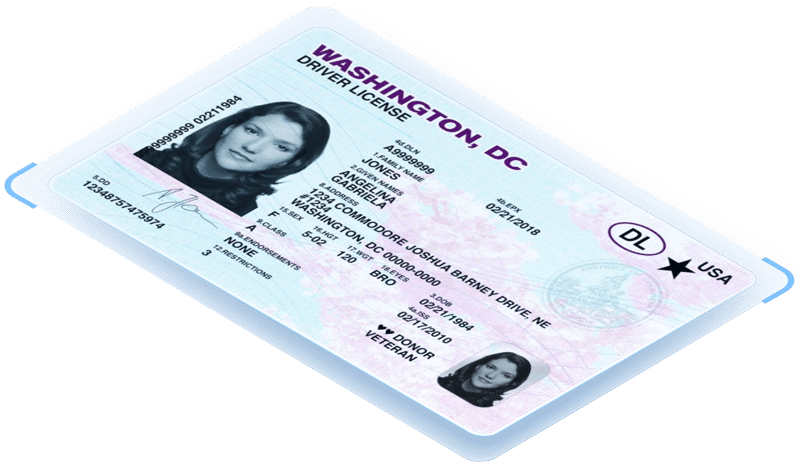
Every U.S. driver’s license and identification card must meet federal and AAMVA standards for anti-fraud design. This includes a layered security approach consisting of:
- Overt features (visible to the naked eye, like holograms or lenticular effects)
- Covert features (visible only under UV or infrared light)
- Forensic features (verifiable only in a lab environment)
While some of these are public, others are intentionally undisclosed to maintain card security and prevent fraudsters from counterfeiting IDs. Below we focus on holographic and lenticular elements, which are among the most visible forms of overt protection.
What are holograms and lenticular prints?
Holograms, also known as optically variable devices (OVDs), are reflective overlays that change appearance when tilted. They’re typically applied as a transparent film or embedded layer featuring state seals, emblems, or repeating text.
Lenticular prints use micro-lens technology to create motion or “flip” effects when viewed at different angles. In the context of IDs, this may appear as a secondary ghost image or a color-shifting background that moves as the card tilts.
Both features are critical in making IDs extremely difficult to counterfeit or alter.
States with holographic or lenticular features
Below we highlight examples of states that publicly document hologram or lenticular technology in their current ID designs. While not all details are released by respective DMVs, the following are among the most clearly identifiable.
Holograms on Arizona IDs
Arizona’s newest polycarbonate ID design includes tilt-variable holograms (angle-dependent visuals) and black-light (UV) holograms depicted as a howling coyote on the front of the ID or scorpion/Monument Valley scene on the back of the ID.
Holograms on new California IDs
California’s DMV announced a 2025 card redesign with “advanced security measures and updated technology.” While the press release doesn’t list every feature, California historically has used holographic/OVD elements and the new design includes next-gen anti-counterfeit features.
Holograms & UV features on Illinois IDs
Illinois’ driver license/ID documentation lists a hologram/overlay, ultraviolet images, microtext, laser perforation and other tamper-resistant features. Most recently depicting Abraham Lincoln’s signature hat, this unique design can be seen under blacklights, or with authentication scanners.
Holograms and and reflective overlays on New York IDs
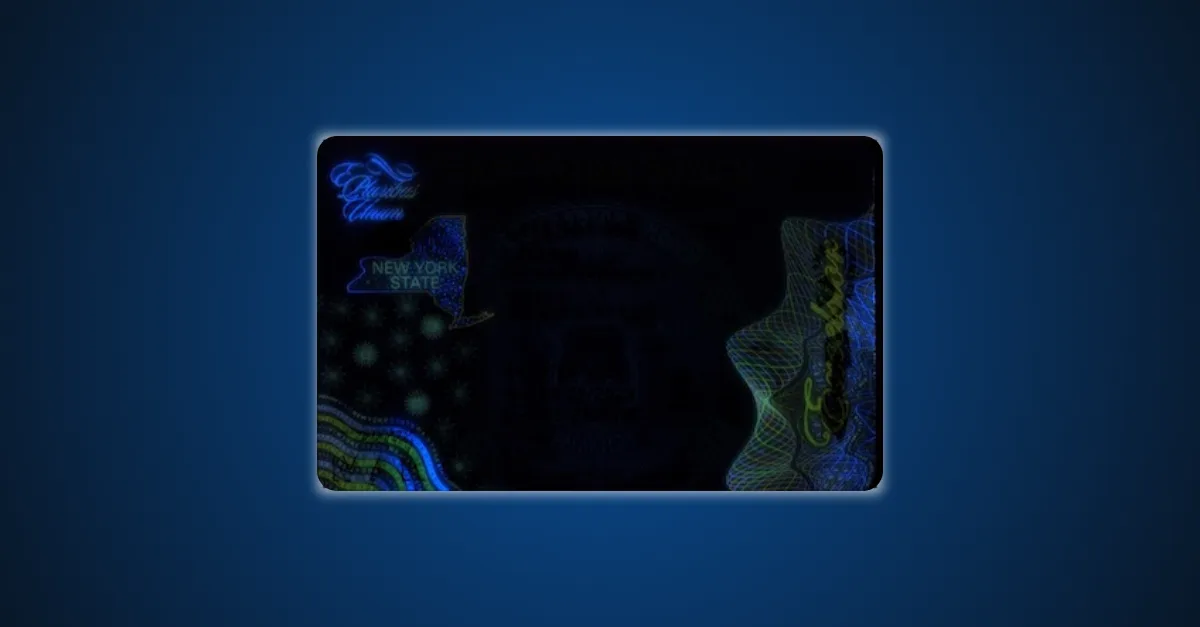
New York’s Enhanced/standard IDs include UV-reactive coats of arms and repeating “NY” text visible under black light. Local/regulatory guides also reference repeating holographic/reflective overlays used specifically in the New York City specific designs.
Lenticular features on Ohio IDs
Ohio’s modern polycarbonate driver license uses laser-engraved photos and a lenticular lens with a secondary photo that appears depending on card tilt. This security feature was confirmed by the ID supplier, Veridos.
Holograms on Oregon IDs
Oregon DMV sample-card documentation specifically calls out a tamper-resistant laminate that “shows a hologram at certain angles and light conditions.” This is often depicted as Mount Hood and the Capitol Building.
Black and white switching holograms on Pennsylvania IDs
One of the more unique hologram state designs, PennDOT has publicly documented a black & white switching hologram overlay (the “PA” keystone device) that reverses black/white when the viewing angle rotates 90°.
Why these features matter for ID verification
Holograms and lenticular effects are first-line inspection tools for fraud prevention. When combined with barcode data, UV imagery, and microtext, they create a multi-layered defense system.
For businesses that rely on ID verification such as financial institutions, age-restricted venues, or transportation services, recognizing these features helps distinguish authentic IDs from high-quality fakes.
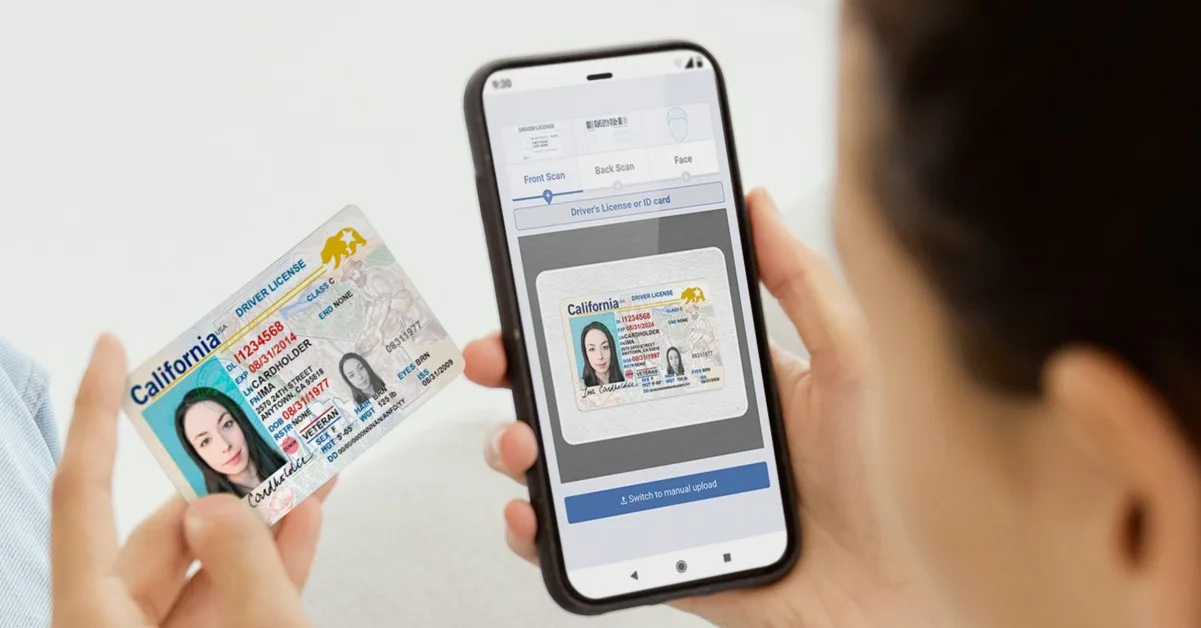
VeriScan and ID authentication are designed to detect these elements automatically. AI-powered document analysis leverages hundreds of ID templates, allowing the software to recognize state-specific holograms and security patterns instantly, even those not made available to the general public.
Conclusion
While most states do not publish detailed hologram specifications, nearly every U.S. ID includes some form of holographic or optically variable design. As more states transition to polycarbonate, laser-engraved IDs, expect to see holograms evolve into more subtle but sophisticated OVD or tilt-image effects that resist tampering while remaining verifiable at first glance. Implementing ID scanning into workflows can ensure compliance while reducing fraud. To learn more, request a demo of our solutions.